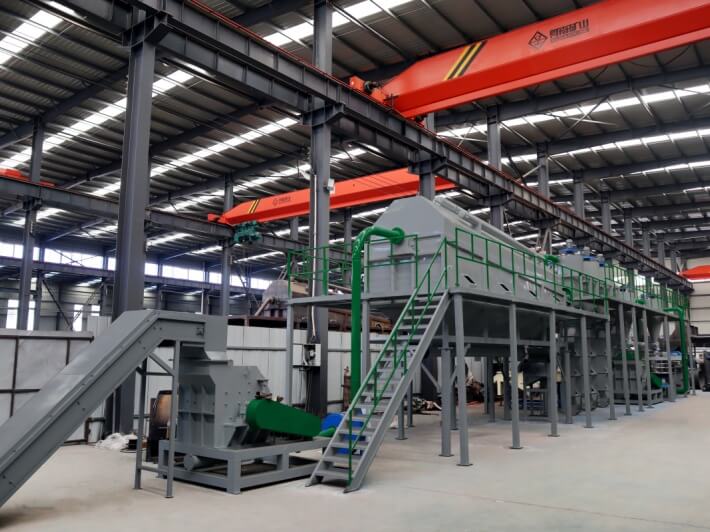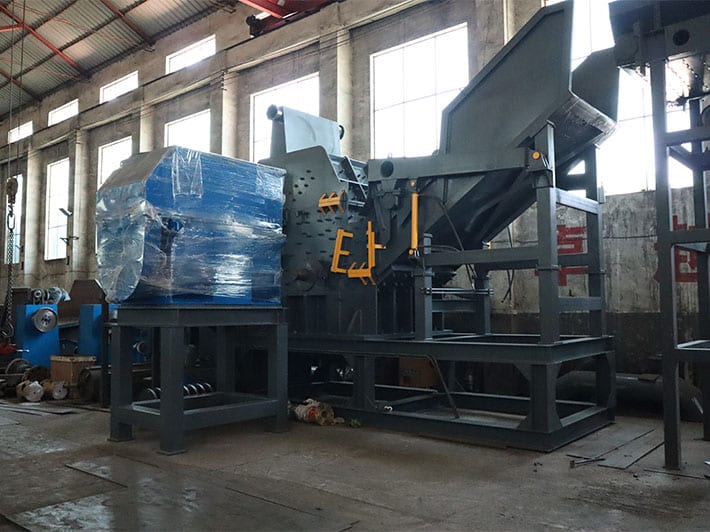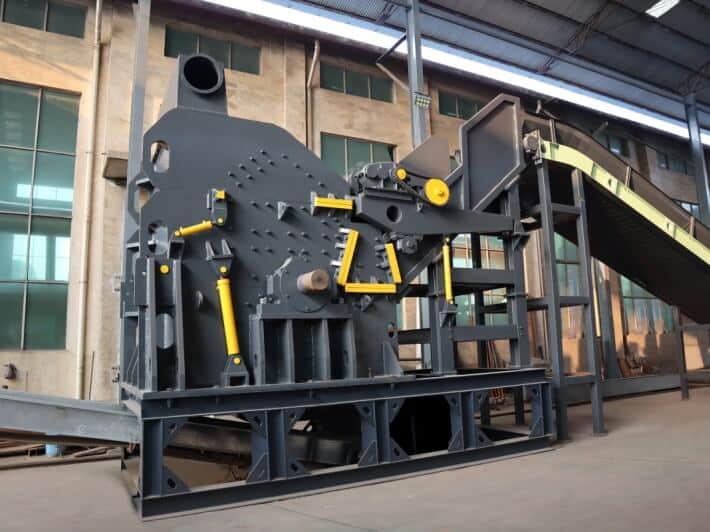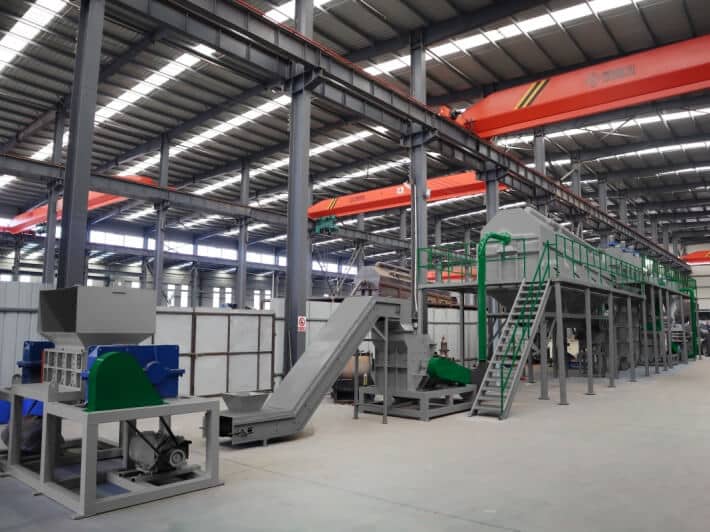
Overview
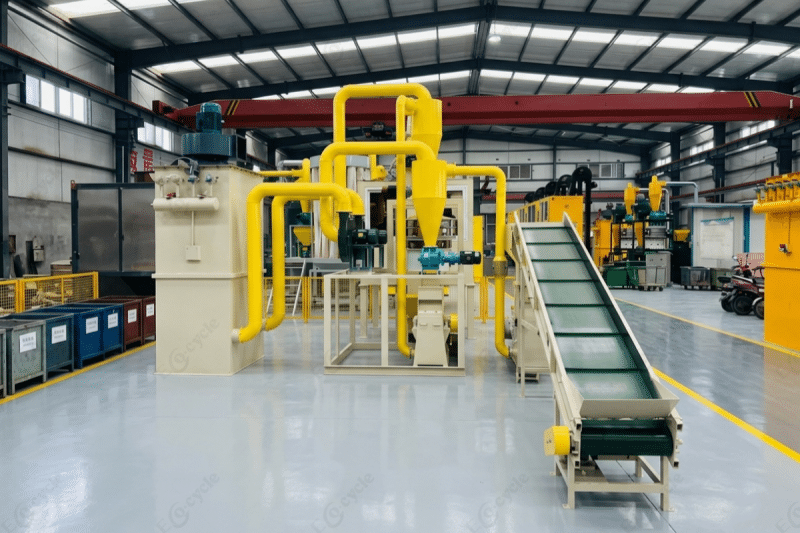
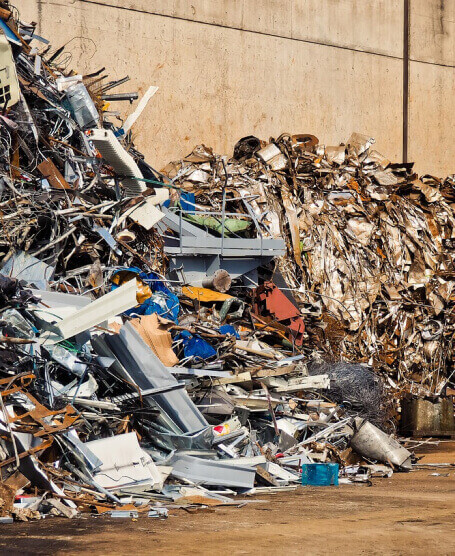
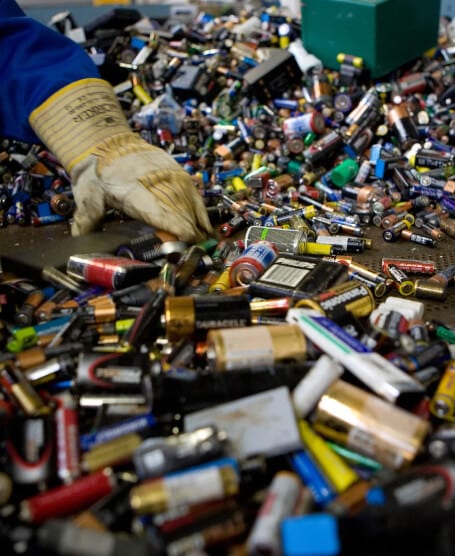
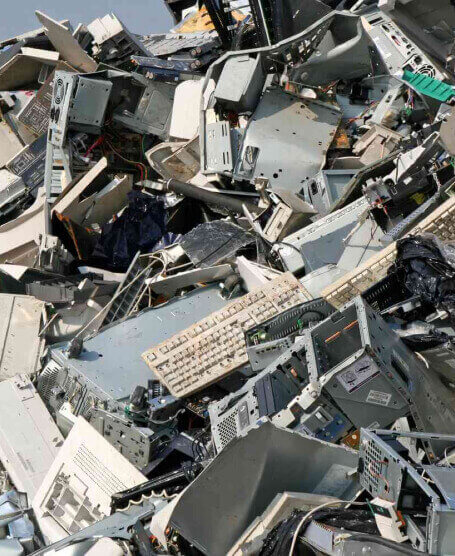
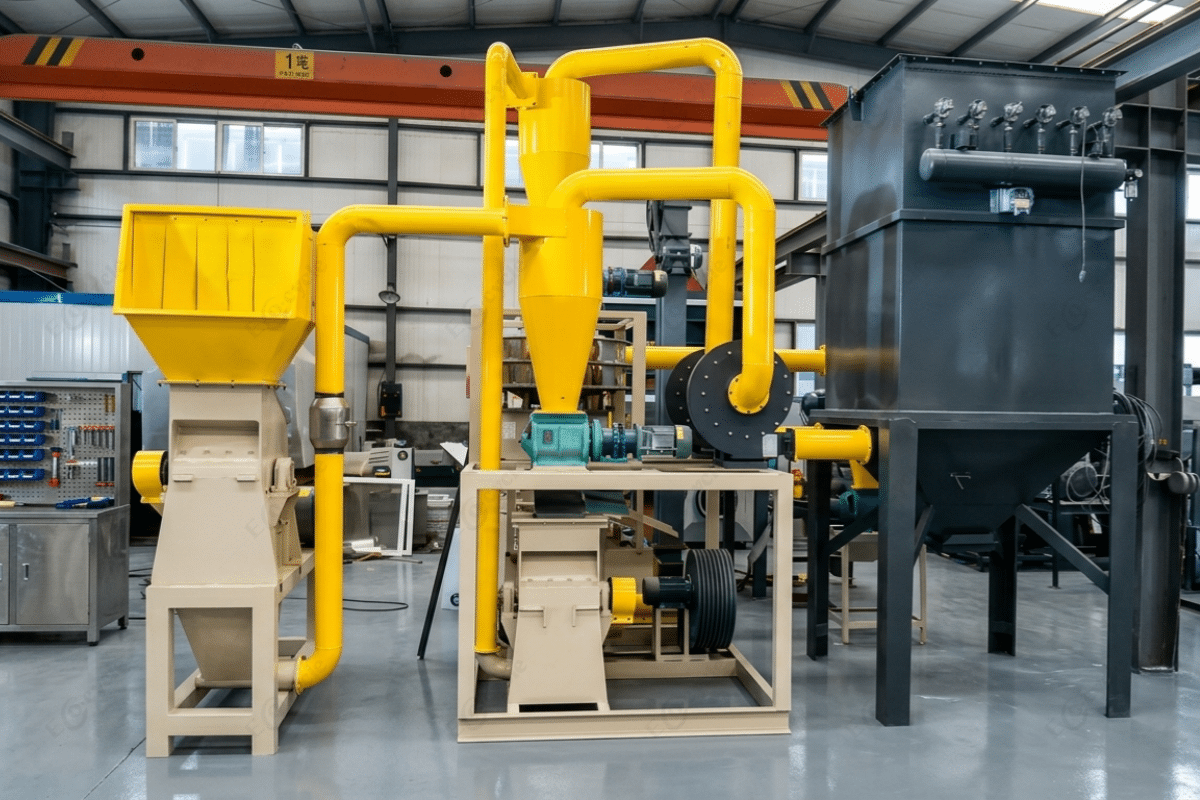
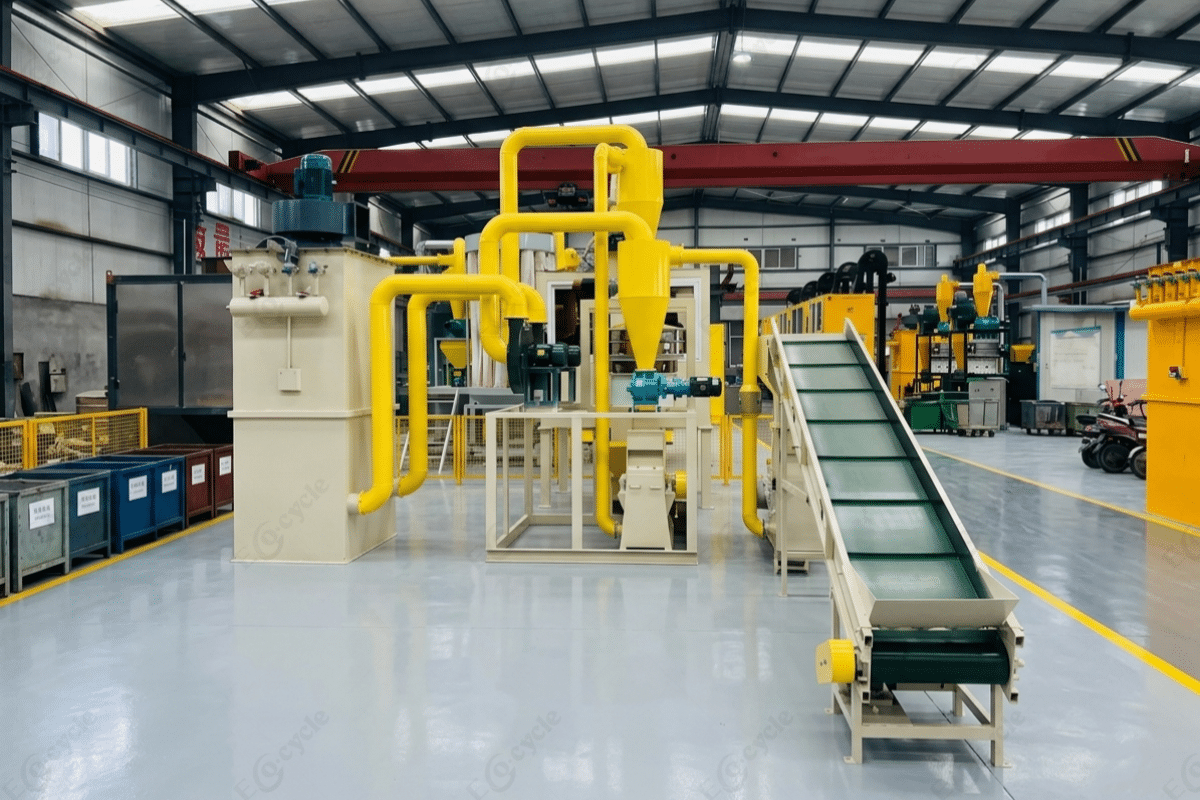
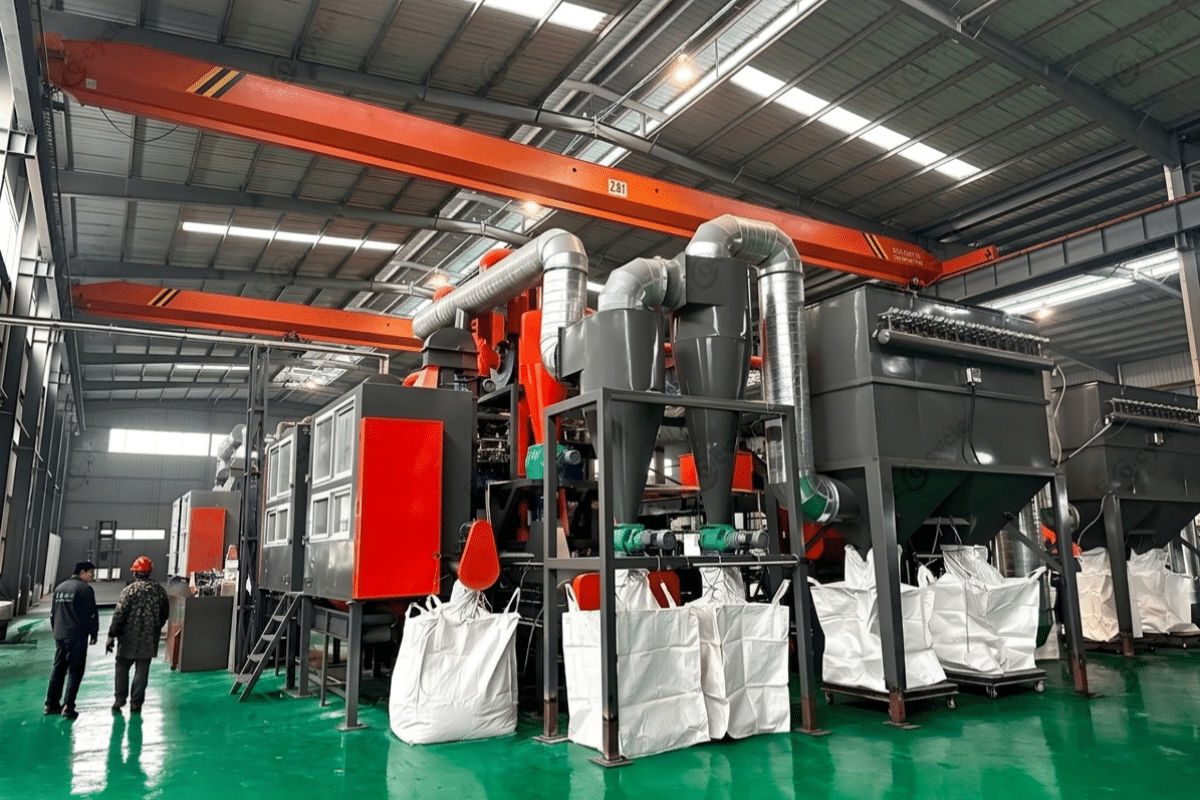
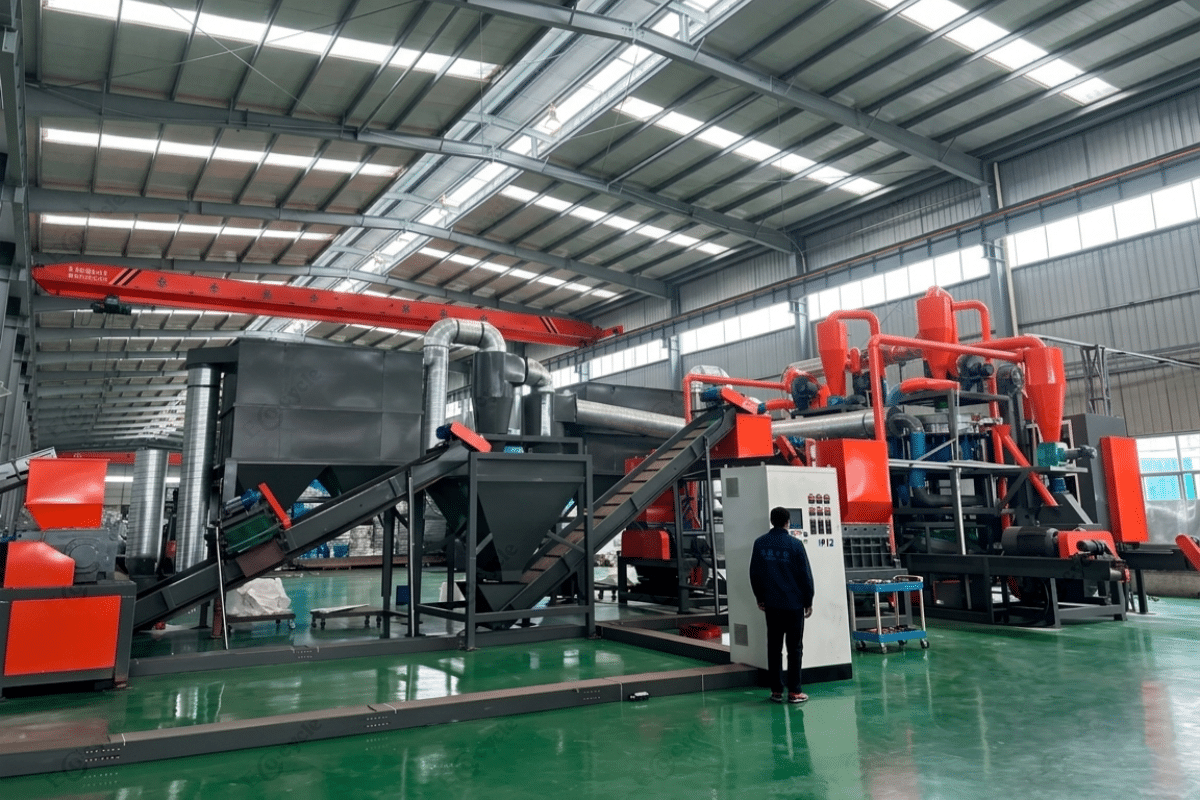
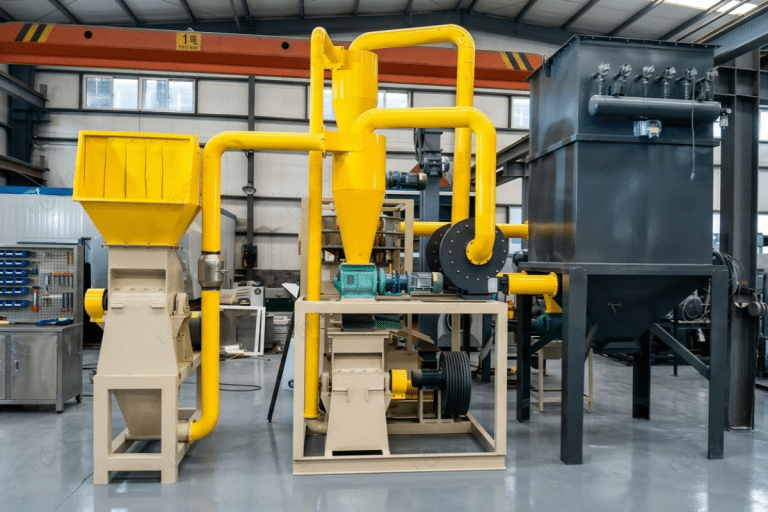
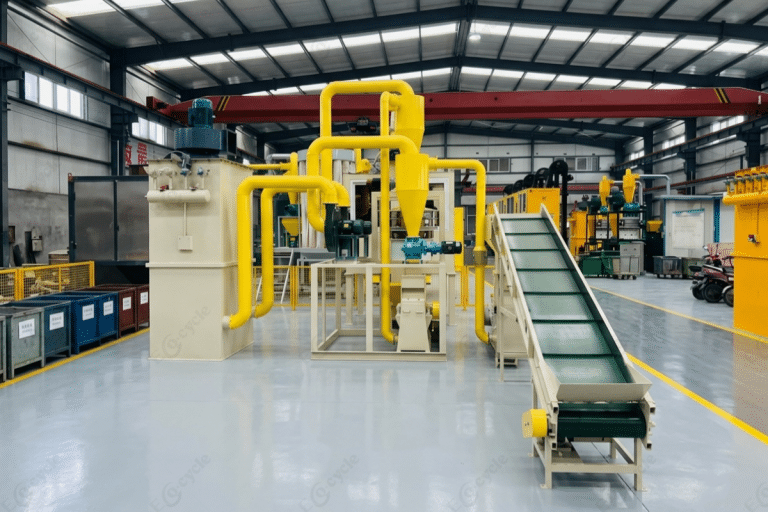
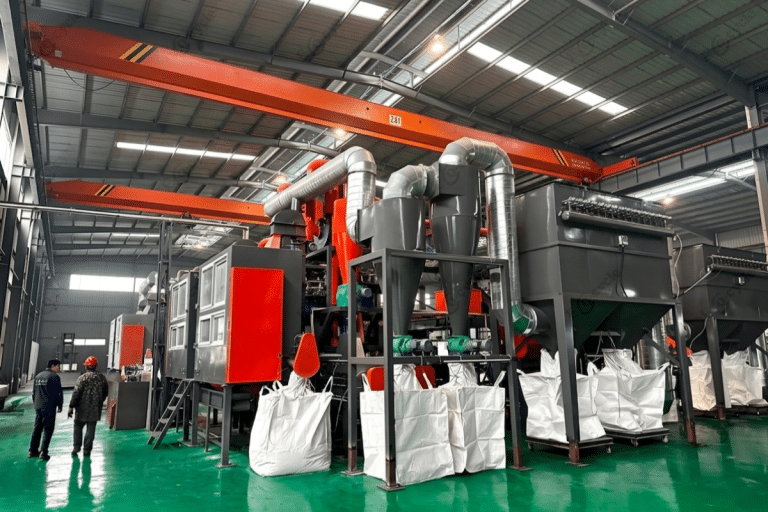
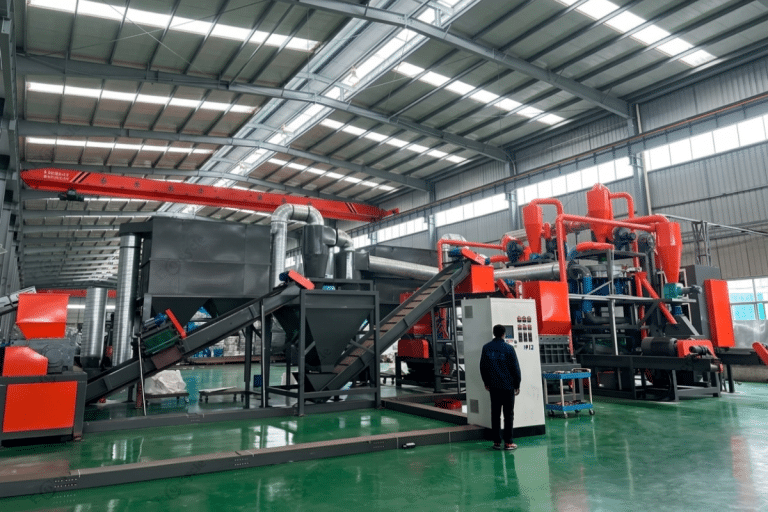
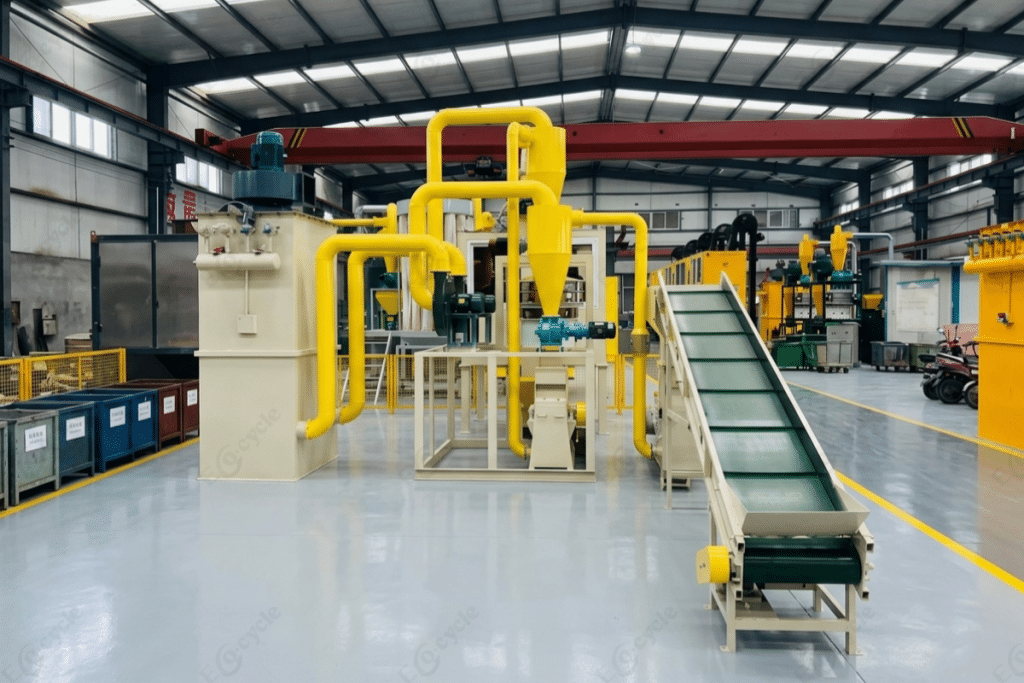
PCB recycling equipment, also known as electronic waste shredding and sorting equipment, is used to recover circuit boards from the interiors of electrical appliances such as televisions and computers. Following recycling and processing, electronic waste can be separated into metallic and non-metallic materials, enabling their reuse. Electronic waste recycling equipment is suitable for recycling various types of circuit boards, including PCBs and FPCBs.
Final product
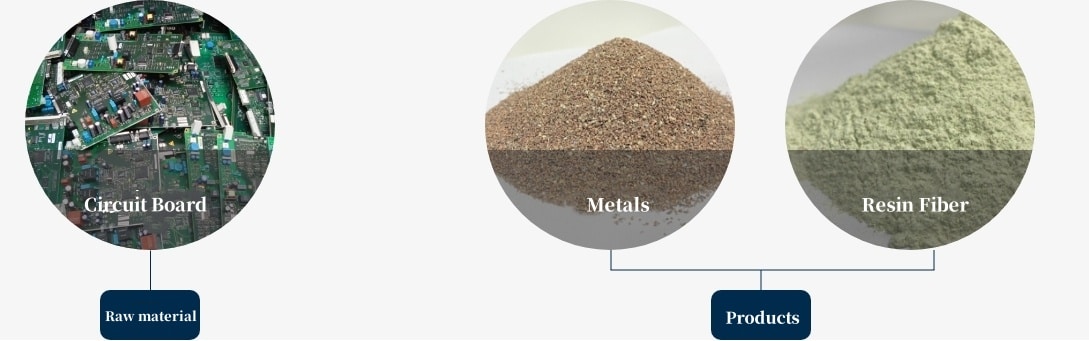
Used for processing various types of waste circuit boards, such as computer boards, mobile phone boards, television boards, copper-clad laminates and circuit boards from other household appliances
Recycling Value
Research into standard printed circuit boards indicates that electronic components account for 58% of their composition, the substrate for 37%, and solder for 5%. For every tonne of substrate, approximately 40% consists of metallic materials and 60% of non-metallic materials; these materials contain almost all the common elements found in the periodic table. It is estimated that one tonne of computer circuit boards contains 0.5 kg of gold, 130 kg of copper, 10 kg of iron, 60 kg of lead, 40 kg of tin, 36 kg of nickel, 40 kg of antimony, as well as other rare and precious metals such as platinum and palladium. Given the high value of metals, fibres and resins, electronic waste recycling equipment not only helps to turn waste into valuable resources but also generates significant economic benefits.
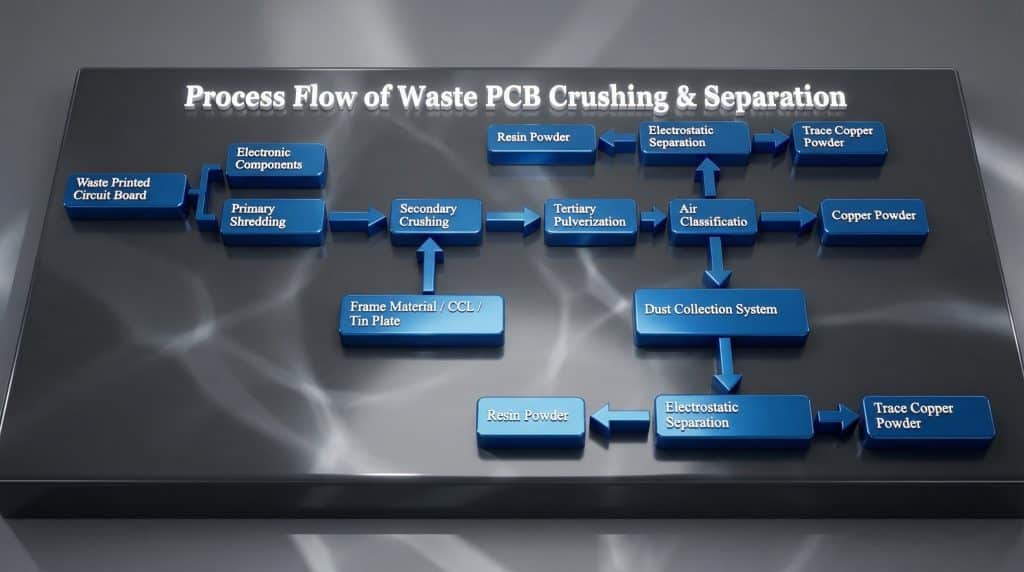
Flow chart
Equipment Features
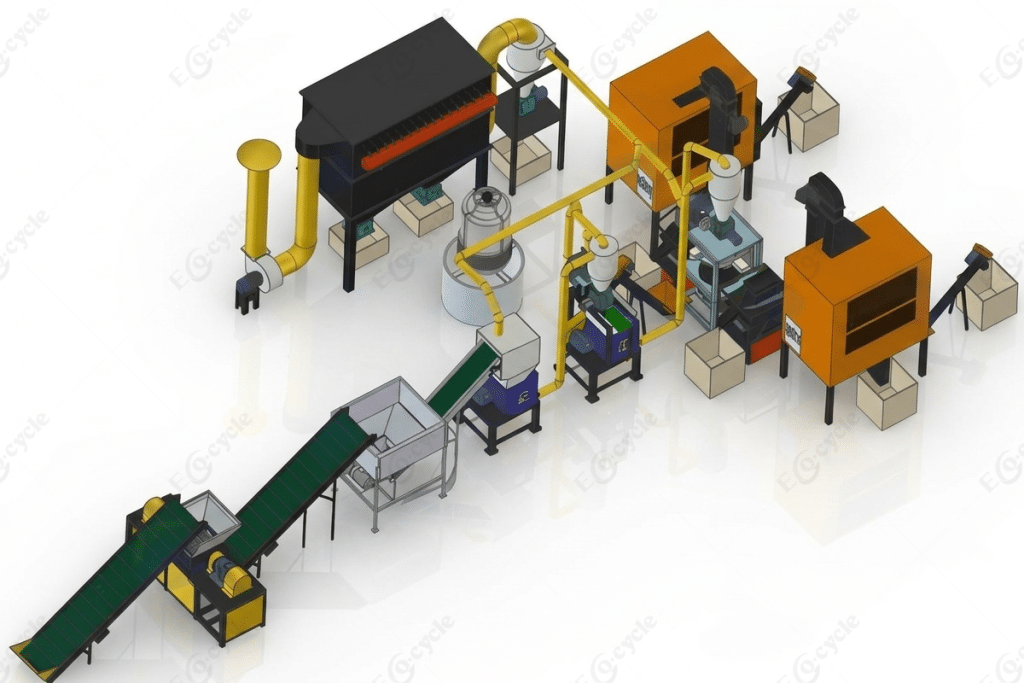
1. Compact structure, rational layout, stable performance and low noise levels.
2. PLC control ensures uniform feeding and coordinated operation across the entire production line.
3. A three-stage crushing process enables a processing capacity of 800 kg per hour.
4. The entire production line utilises negative pressure feeding to effectively reduce dust spillage.
5. The recirculation system enhances crushing efficiency.
6. Equipped with a magnetic separation function to remove iron from the material.
7. The air classification equipment achieves a separation efficiency of over 97%.
8. The pulse dust collector operates at an efficiency of over 99%, effectively suppressing dust emissions and fully complying with national environmental protection requirements, with no secondary pollution.
9. The high-voltage electrostatic separator ensures finer and more efficient sorting, effectively controlling the loss of non-ferrous metals.
10. The entire production line is fitted with walkways and guardrails at elevated positions, facilitating real-time monitoring and maintenance by service personnel.
Technical parameter
| Equipment Model | Capacity (kg/h) | Power (kw) | Dimension (M) | Weight (T) |
| PCB 300 | 200-300 Kg/H | 102 Kw | 2055 m | 15 Ton |
| PCB 500 | 400-500 Kg/H | 134 Kw | 2565 m | 20 Ton |
| PCB 800 | 600-800 Kg/H | 194 Kw | 3065 m | 30 Ton |
| PCB 1000 | 800-1000 Kg/H | 238 Kw | 3585 m | 40 Ton |