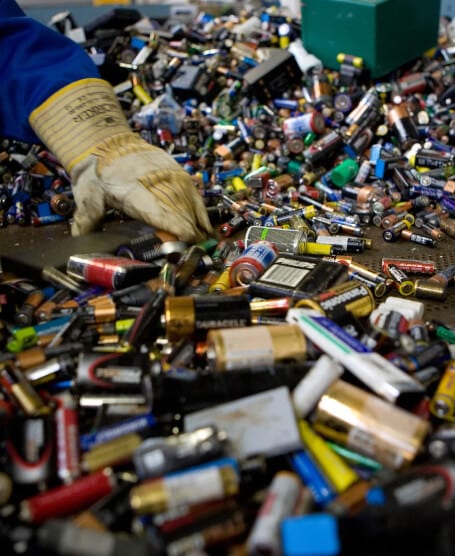
In the context of global carbon neutrality, lithium-ion battery recycling is no longer simply “waste disposal,” but a battle to protect resources. How does an automated lithium-ion battery recycling production line transform tons of waste batteries into high-value strategic materials such as nickel, cobalt, and lithium? Ecocycle Machinery will unveil the secrets of this green alchemy through three core stages: discharging, crushing, and sorting.
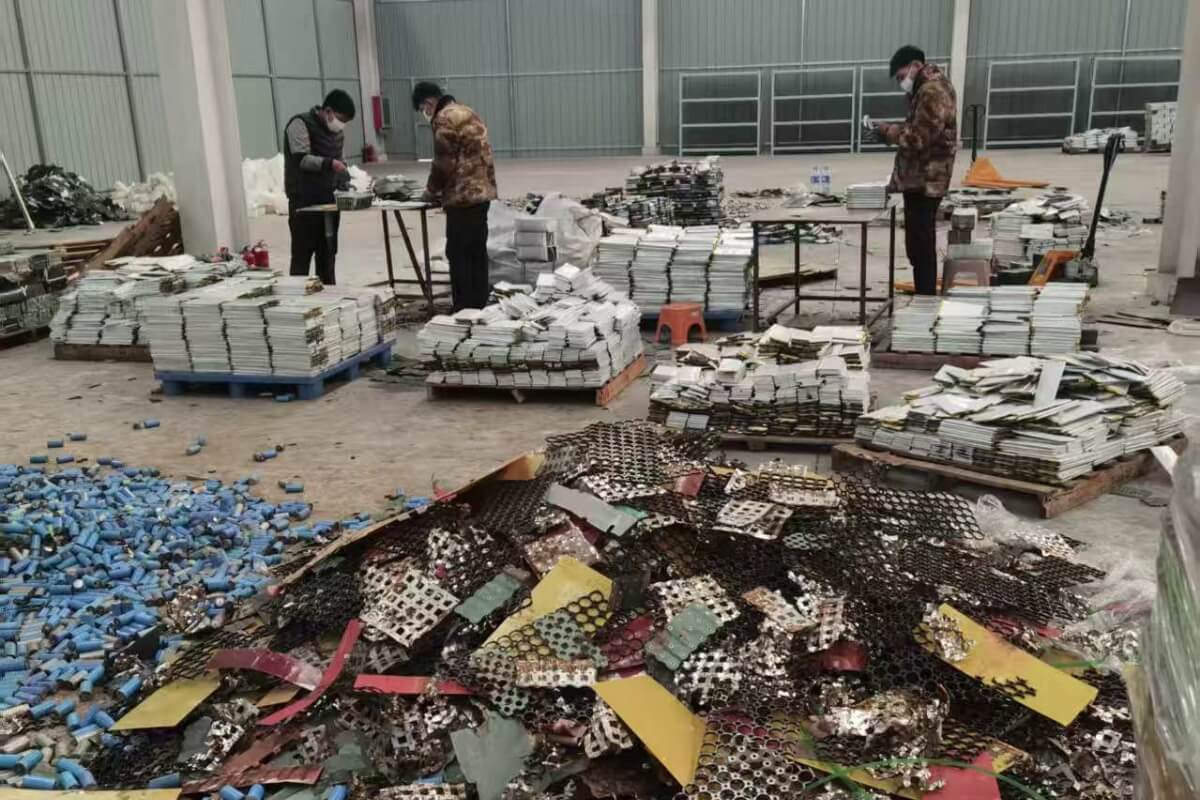
The first step in recycling is to remove the “charge armor” from the batteries.
Brine Immersion Discharging: Waste batteries are placed in a specially prepared brine solution, where residual electricity is consumed through electrolysis.
Automated Load Discharging: For large power battery packs, discharging equipment is used to feed the electrical energy back to the grid or energy storage devices, achieving energy recovery.
Why Discharge? Completely eliminating residual voltage effectively prevents fires or explosions caused by short circuits during subsequent crushing.
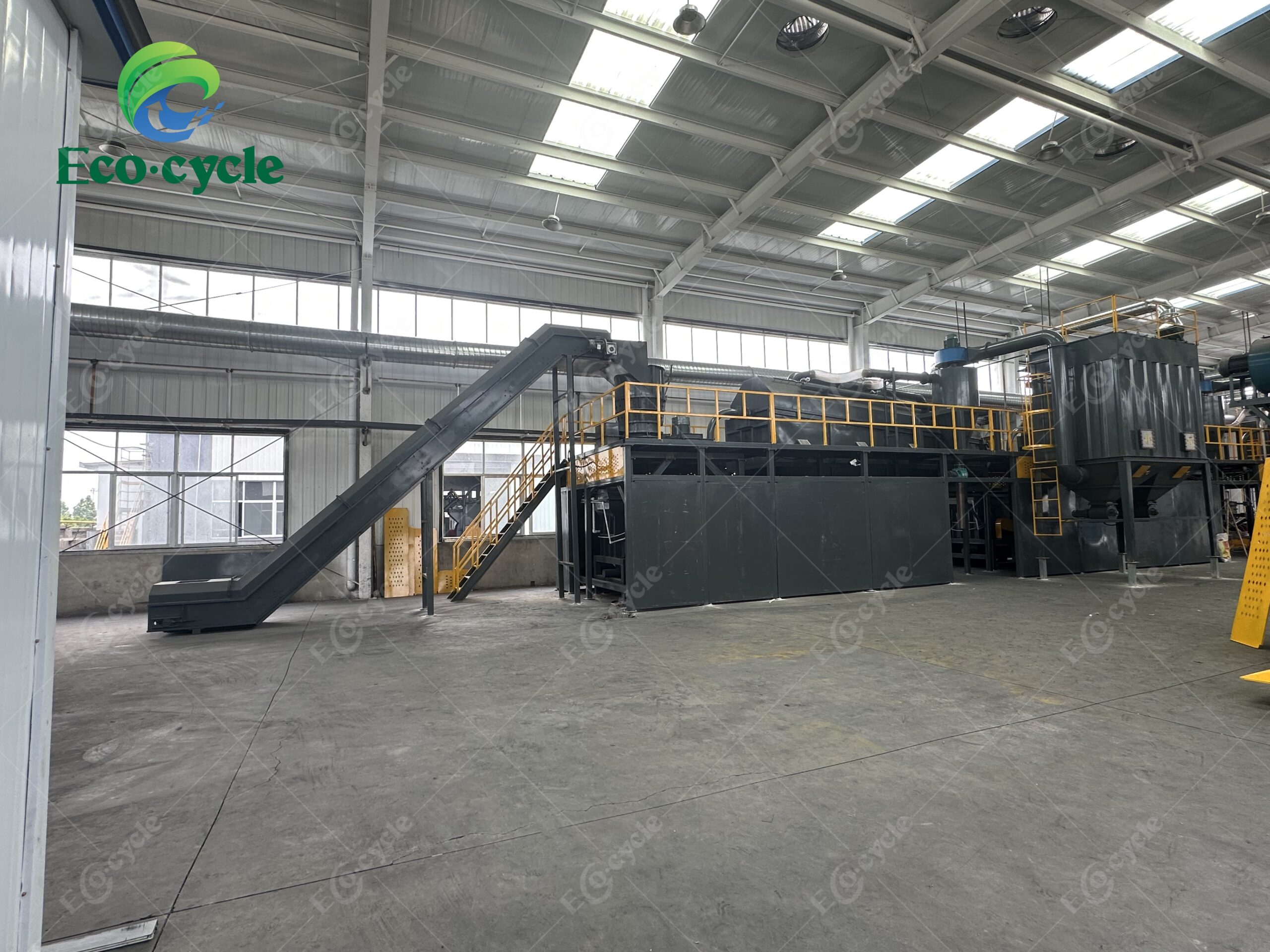
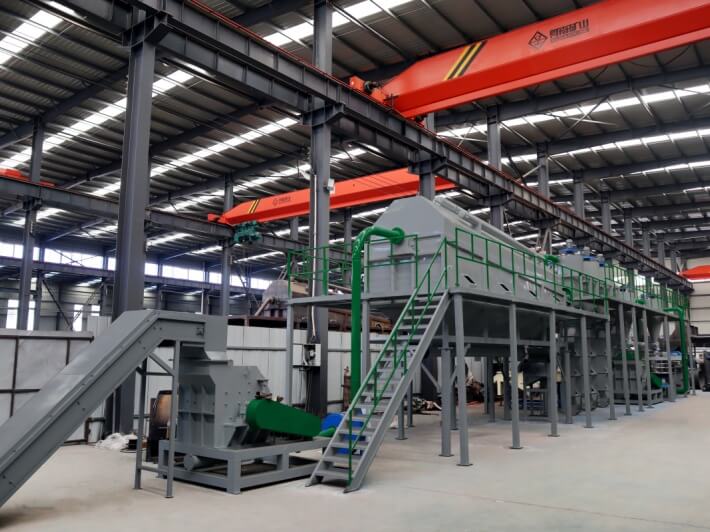
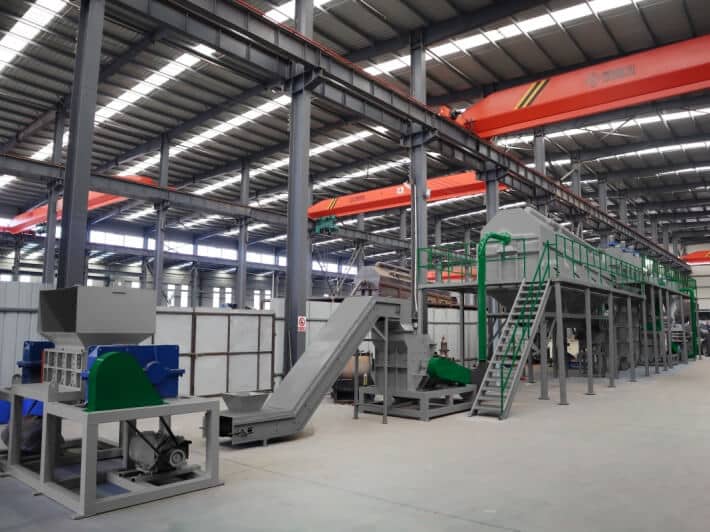
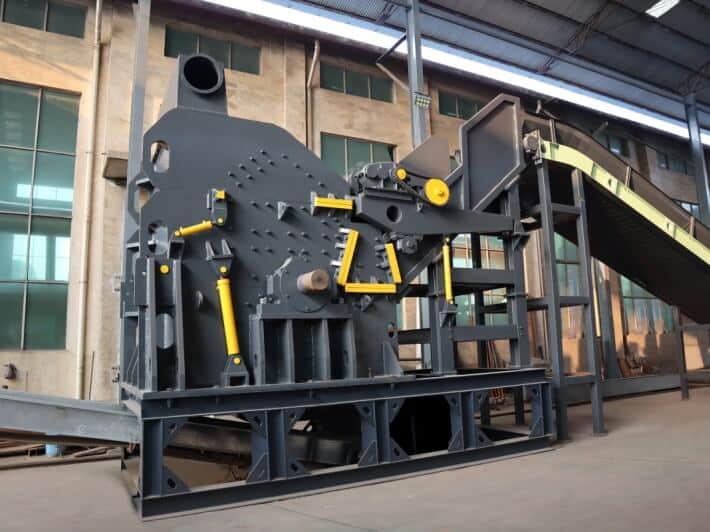
After discharge, the batteries enter a sealed crushing system.
Coarse and Fine Crushing: A dual-shaft shear crusher breaks down the batteries into centimeter-sized fragments.
Low-Temperature/Vacuum Environment: To prevent electrolyte evaporation and contamination, the advanced production line operates under inert gas protection.
Material Separation: At this stage, the battery casing, separator, and positive and negative electrode plates are initially separated, laying the foundation for the next step of fine sorting.
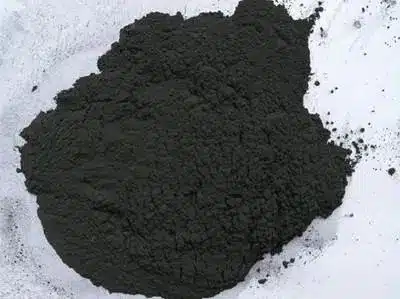
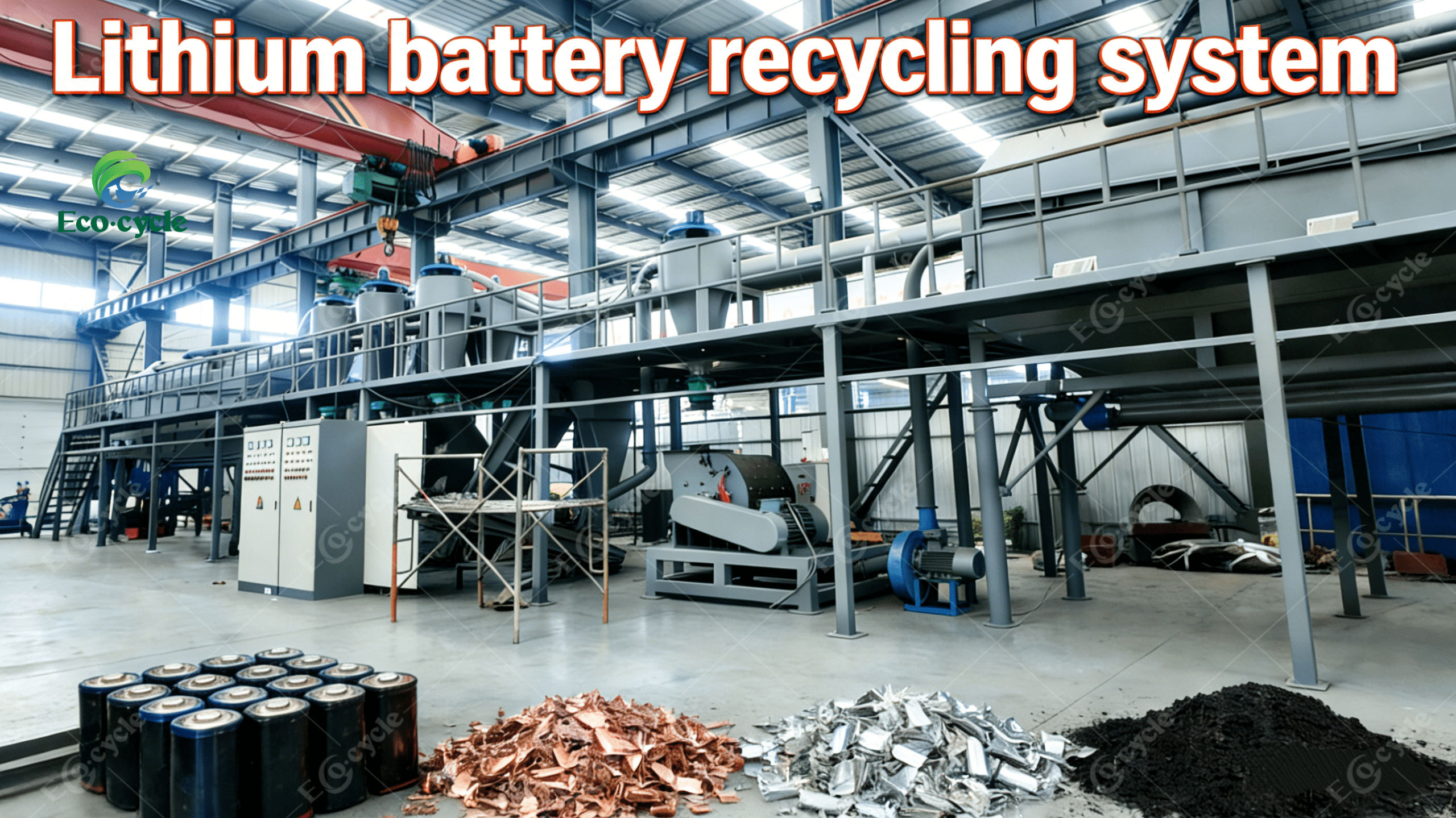
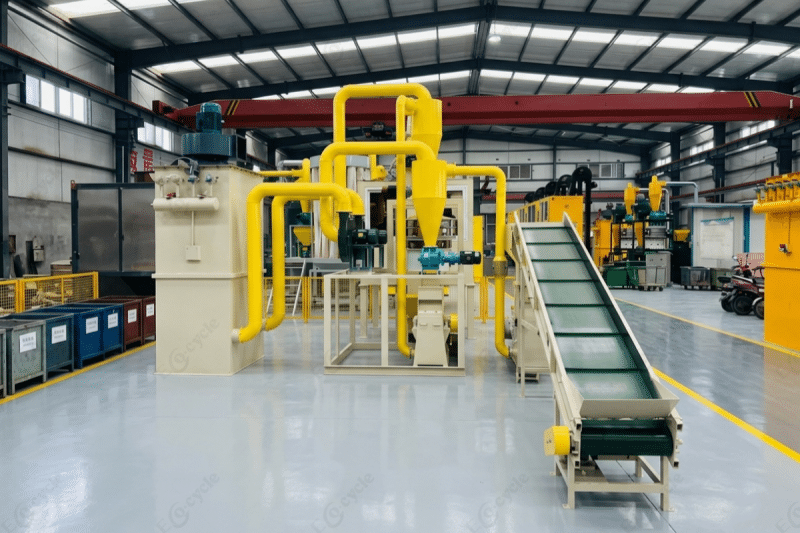
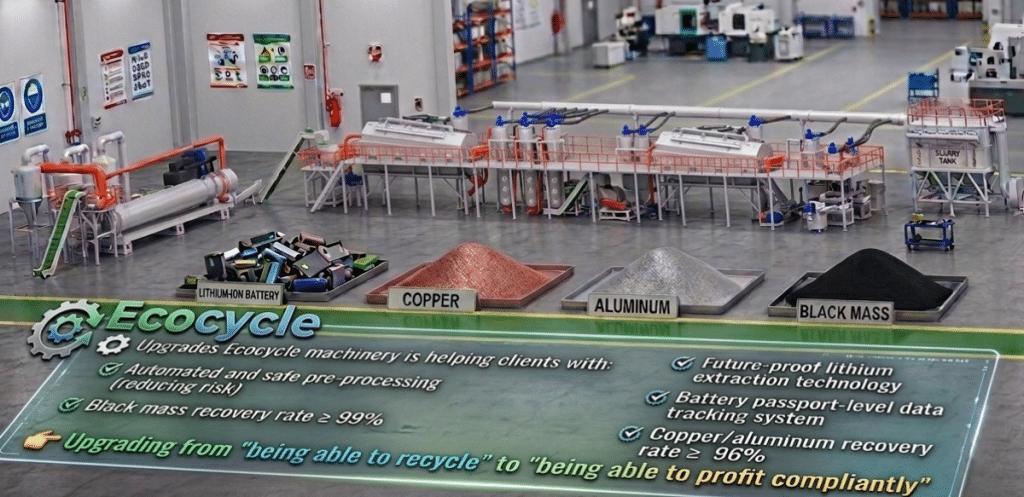
This is the “brain” of the entire production line, designed to perfectly separate copper, aluminum, plastic, and the core product—black mass.
Magnetic Separation: Rapidly separates magnetic casing materials such as iron and nickel.
Air Separation: Utilizing the difference in material density, lightweight separator paper and plastic film are blown out.
Vibrating screening and airflow separation: Finally, a precision gravity separator completely separates copper foil, aluminum foil, and the positive and negative electrode active materials (black powder) containing lithium, cobalt, and nickel.
Production value: The higher the purity of the separated “black powder,” the lower the cost of subsequent hydrometallurgical extraction of metal elements.
The lithium battery recycling industry has shifted from “extensive dismantling” to “digital and intelligent refining.” A stable, environmentally friendly, and high-yield recycling production line is not only a profit-making tool for enterprises but also a crucial link in fulfilling carbon footprint tracking (Battery Passport).