On April 1, 2026, China’s new “Interim Measures for the Management of Recycling and Comprehensive Utilization of Waste Power Batteries from New Energy Vehicles” officially came into effect.
The new regulations propose establishing a full lifecycle traceability system for power batteries from new energy vehicles and stipulate the coding, labeling, and necessary dismantling technical information for power batteries.
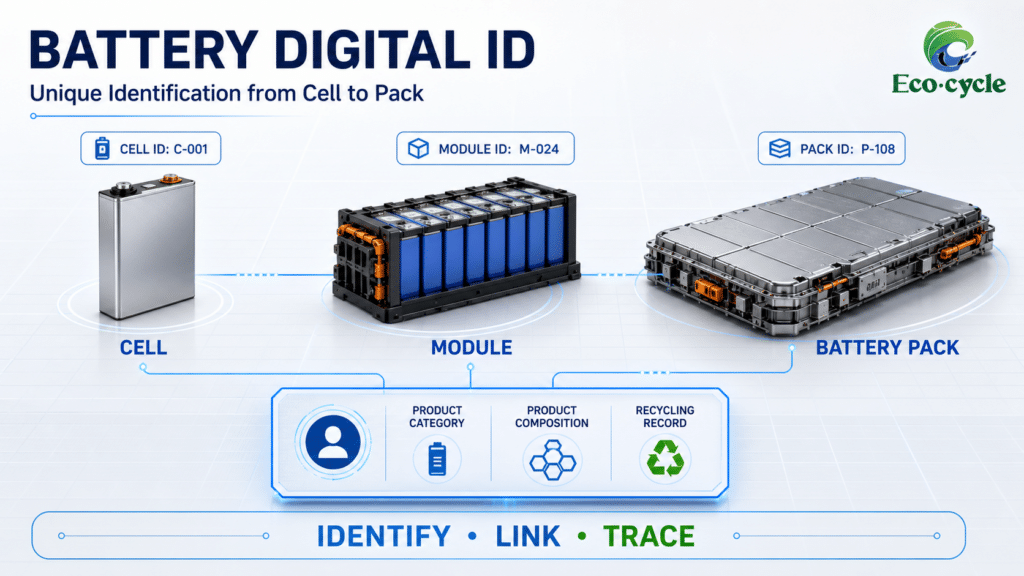
One change that recycling companies should pay attention to is that power battery information is beginning to evolve from a single number to a more complete digital identity.
According to the regulations, individual power battery cells, modules, and battery packs need to be coded according to relevant rules. The codes should be unique and accurate, and the labels should be clear, visible, and durable.
The regulations also propose establishing a digital identification number system for power batteries. The digital identification number will include necessary information such as product category, product composition, and end-of-life recycling information. Specific implementation requirements will be subject to subsequent supporting regulations.
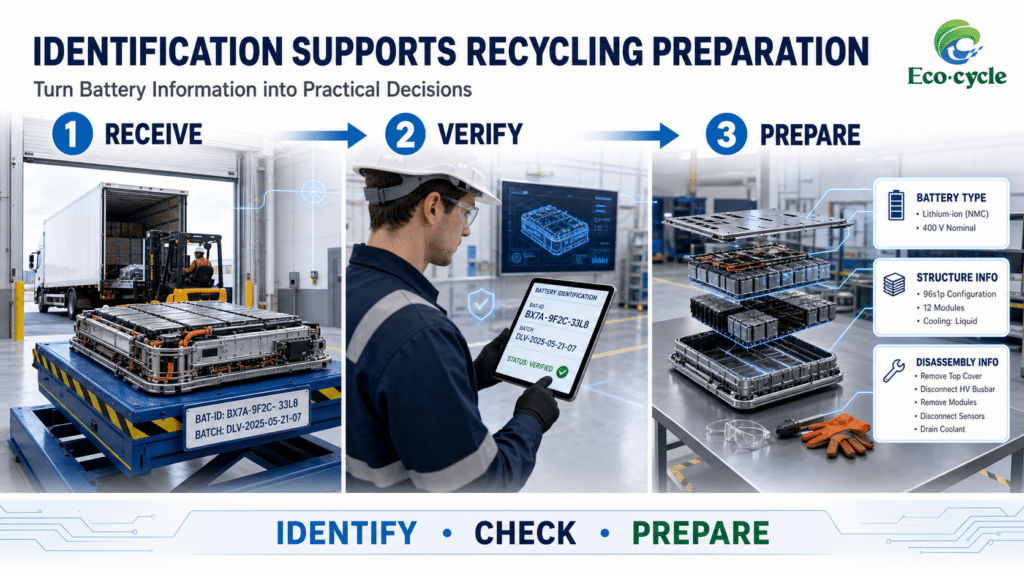
For recycling companies, these changes may affect several stages:
- Raw Material Receiving.
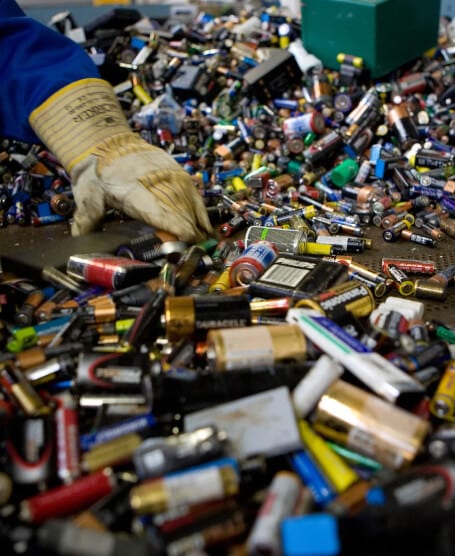
When batteries enter the recycling plant, a correlation can be established between battery code, delivery unit, quantity, weight, and appearance condition, reducing issues of unclear origin or batch mixing.
- Disassembly Preparation.
Necessary battery structure and disassembly technology information helps identify the connections between battery packs, modules, and cells, but it cannot replace on-site safety inspections and actual sample verification.
- Batch Management.
Primary battery codes can serve as a reference for recycling batch records, creating a clearer correspondence between receiving, storage, pre-processing, and final discharge.
- Processing Result Recording.
Recycling companies still need to record incoming weight, processing date, material condition, and different discharge results. Digital identities provide an information entry point; actual recycling data still needs to be established during the production process.
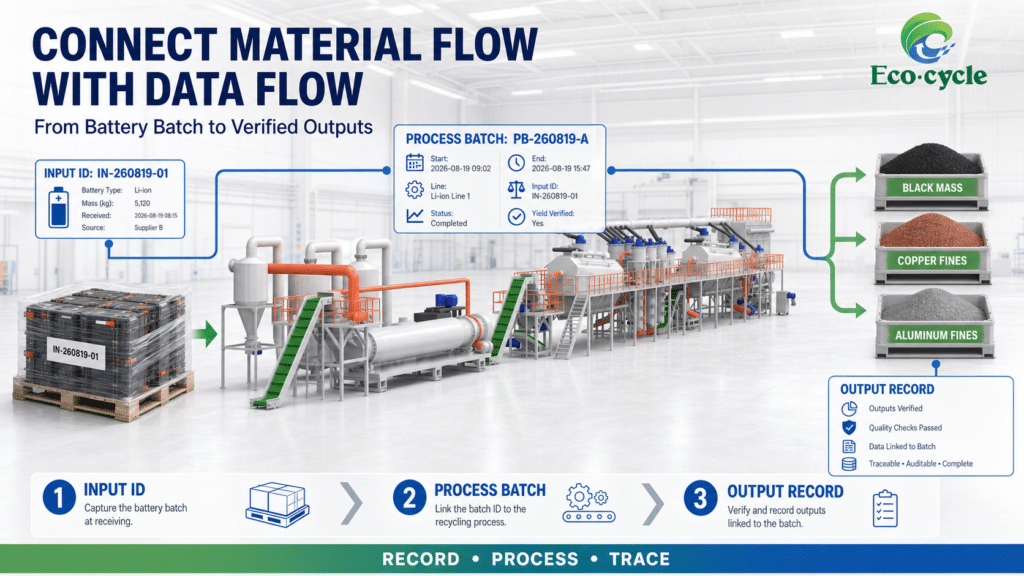
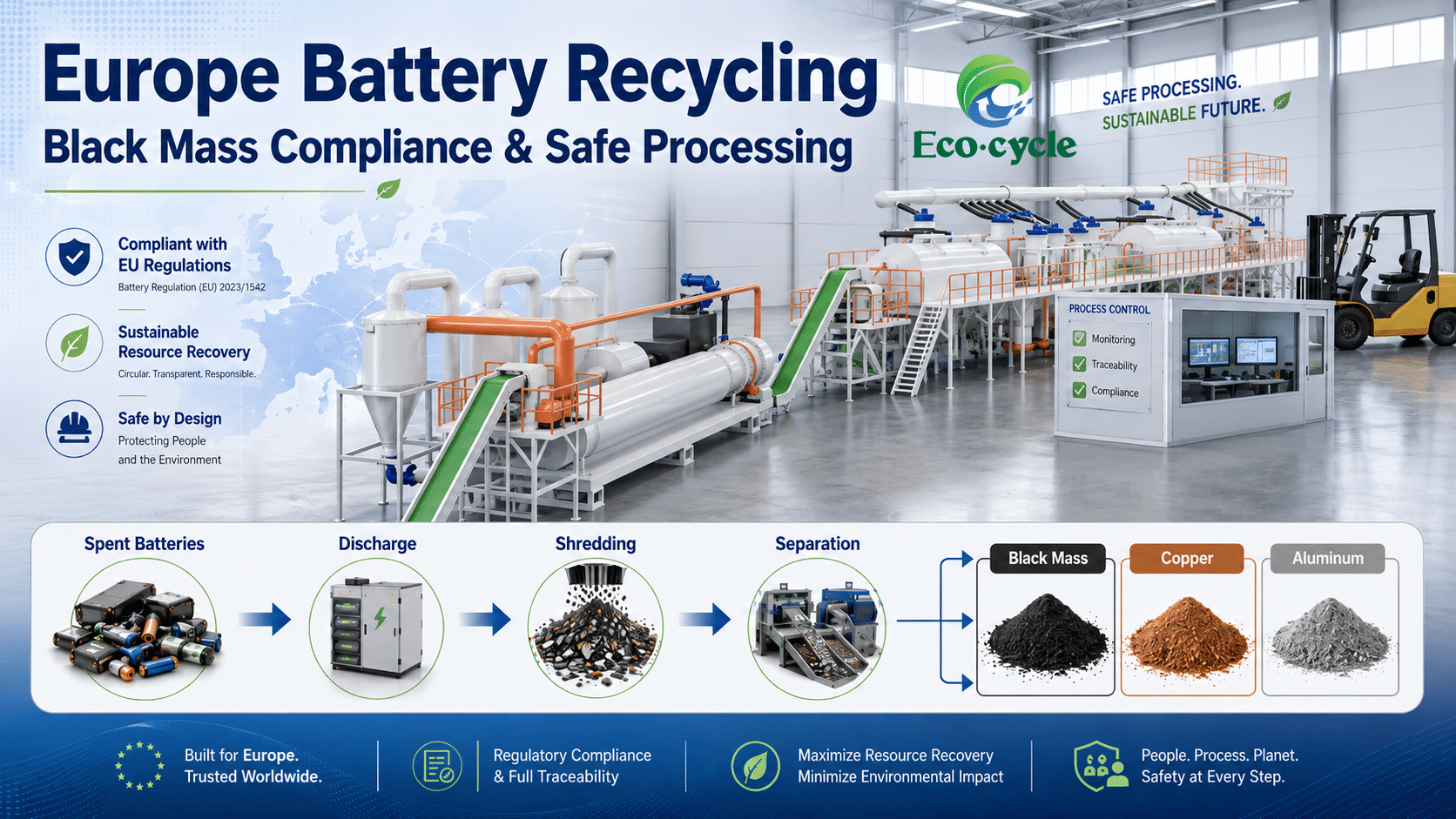
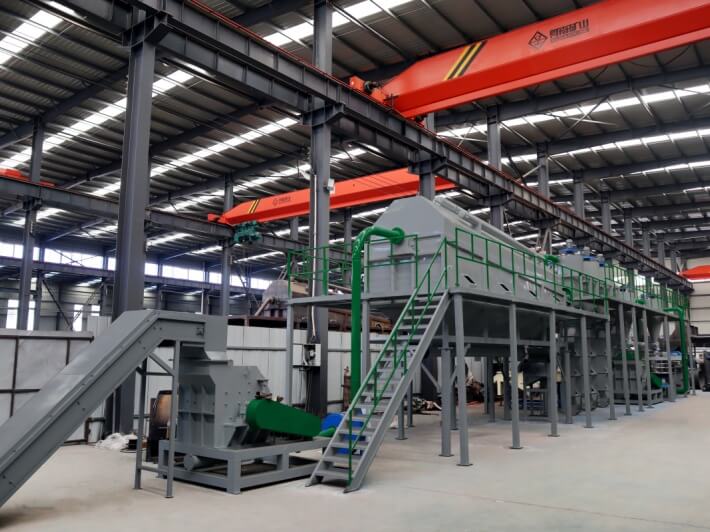
For recycling production lines, this means that future project designs may involve both material flow and information flow simultaneously.
Whether the equipment facilitates batch receiving and transport, whether the output can be weighed separately, and whether sampling and recording are easy to perform all affect whether traceability information can be implemented in actual production.
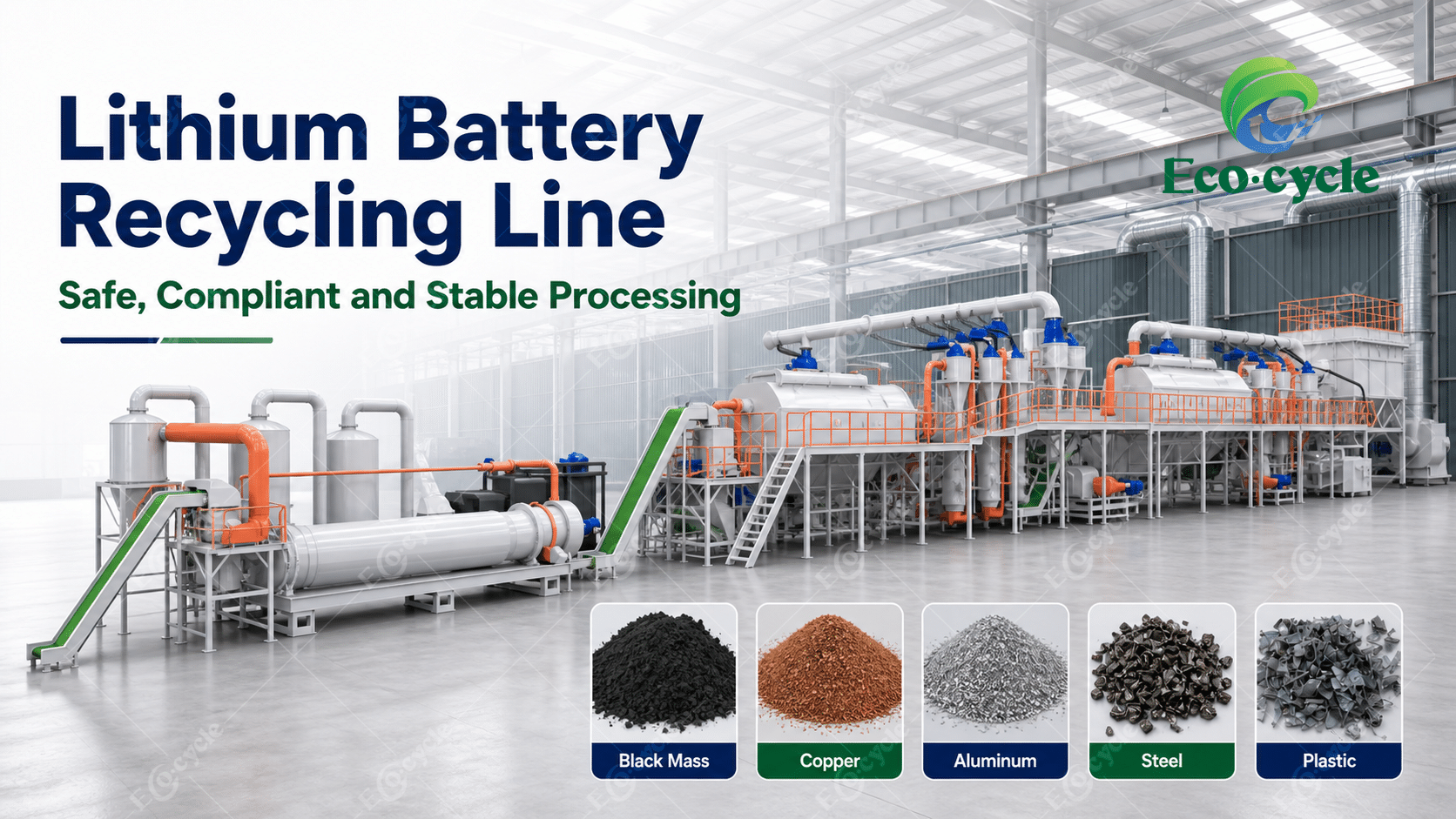
When evaluating lithium battery recycling projects, ECOCYCLE Machinery can assist clients in confirming the necessary process conditions for front-end receiving, batch processing, and independent output, based on the type of raw materials, processing scale, and target products.
A digital ID for power batteries will not automatically complete the recycling process, but it may allow recycling companies to know earlier what batteries they are processing and provide a clear starting point for subsequent data matching.