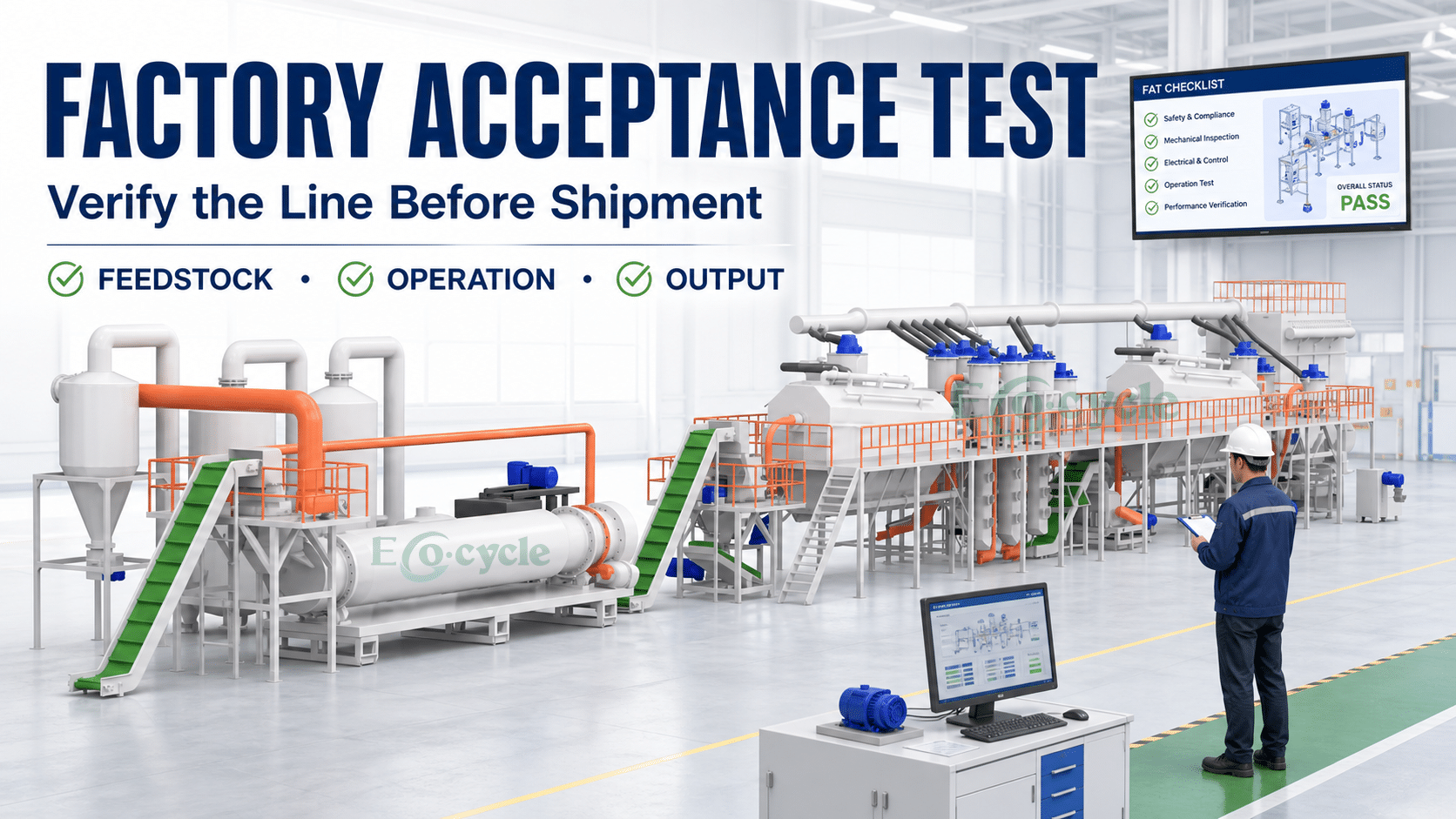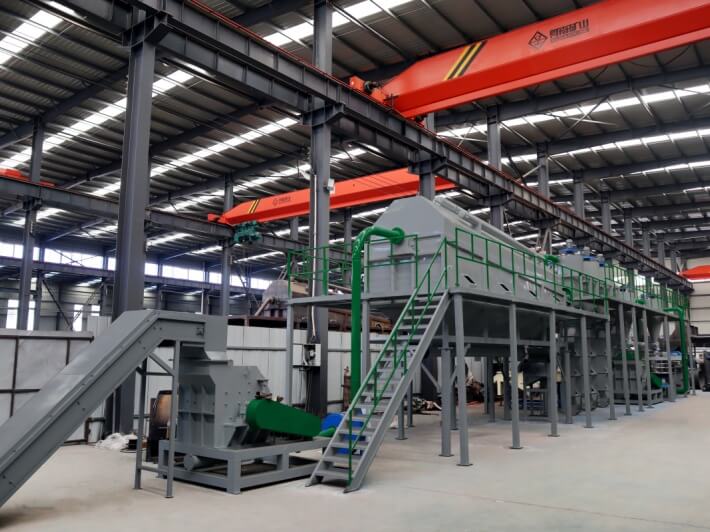
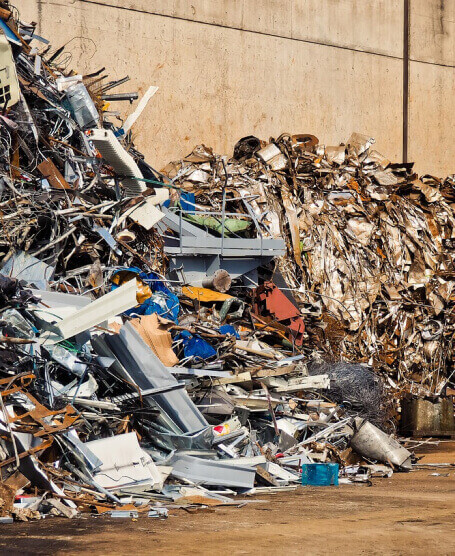
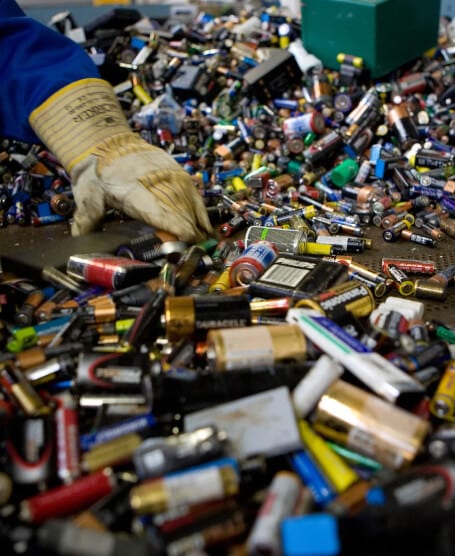
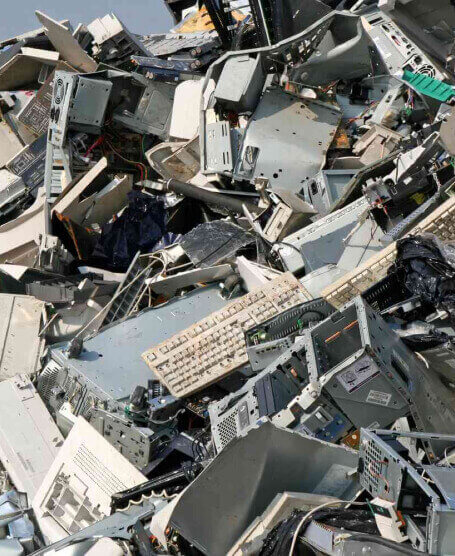
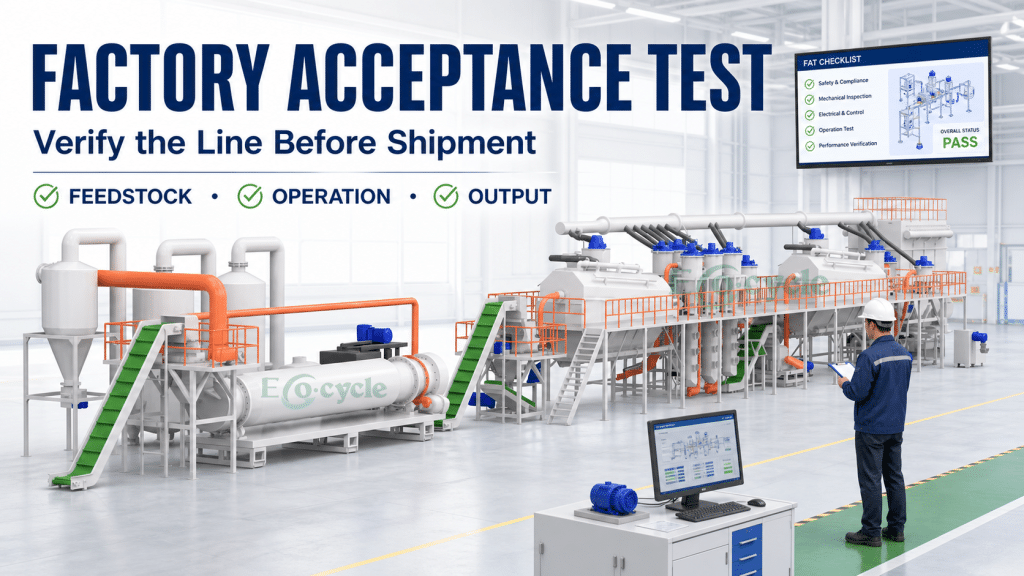
For lithium battery recycling projects, FAT factory acceptance testing is a crucial step before equipment shipment.
The purpose of FAT testing is not only to confirm whether the equipment can start, but also to verify the equipment connectivity, processing status, and actual output of the entire production line under agreed materials and operating conditions.
To ensure the test results can be verified, projects typically need to establish clear data records.
I. Test Material Information
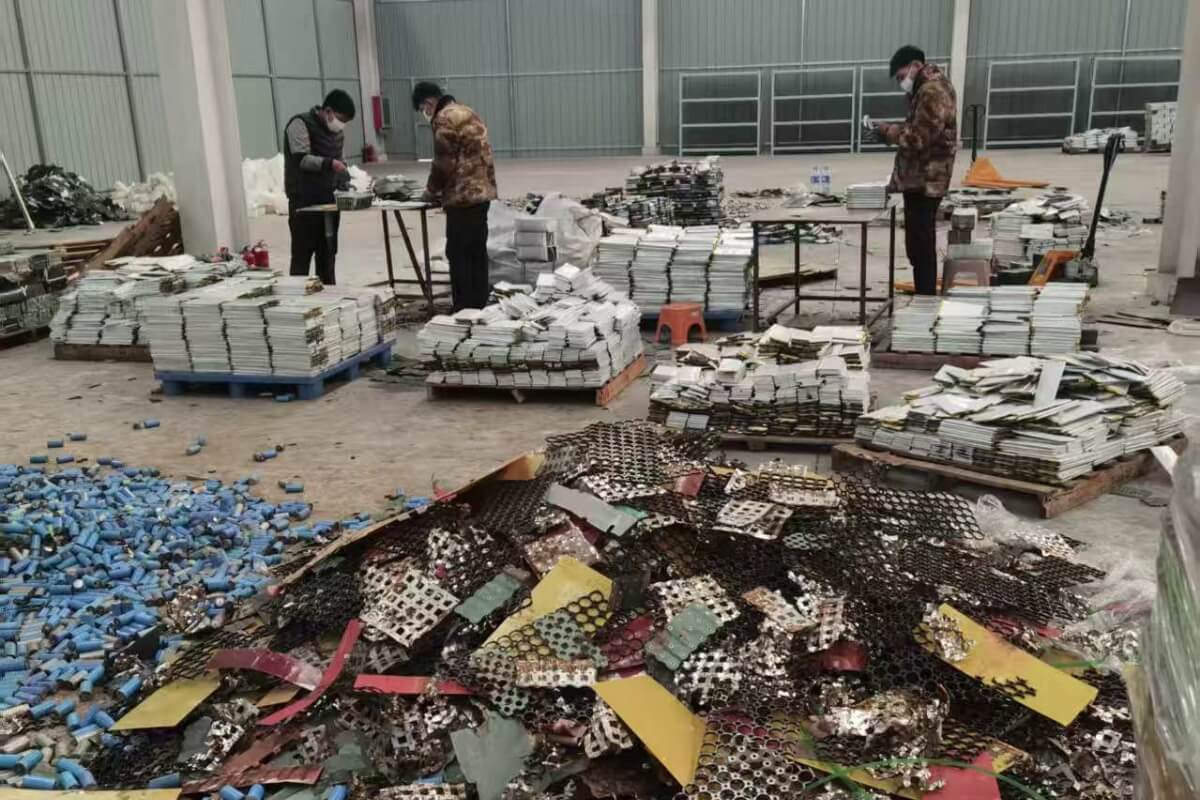
Record the source of the raw materials, battery chemistry system, material form, weight, and current status.
If the test materials differ significantly from the raw materials to be used in the project, this should also be noted in the acceptance record.
II. Operating Time and Feed Data
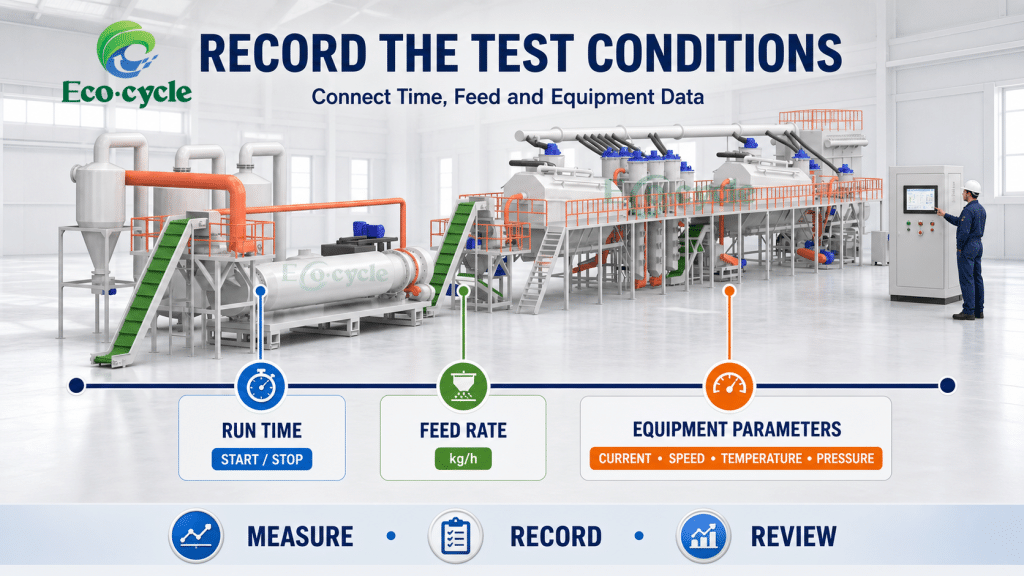
Record the start time, end time, actual operating time, feed weight, and feed rate.
Any instances of material interruption, bridging, blockage, or manual adjustments during operation also need to be recorded separately.
III. Key Equipment Operating Parameters
Record the current, speed, temperature, negative pressure, or other necessary parameters of key equipment according to the production line configuration.
The focus of data recording is not on the number of fields, but on its ability to describe the equipment’s operating status under actual material conditions.
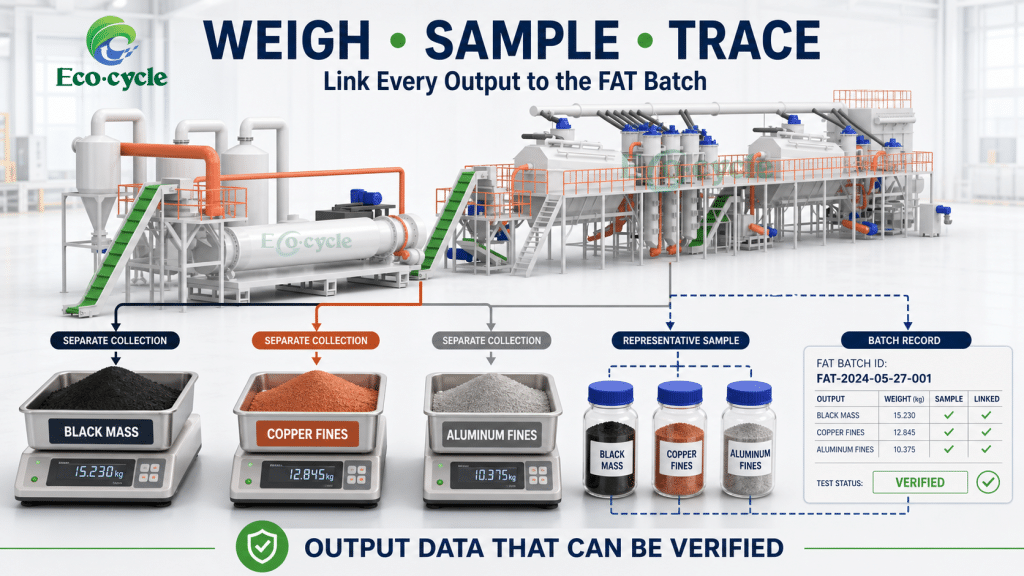
IV. Weight of Different Outputs
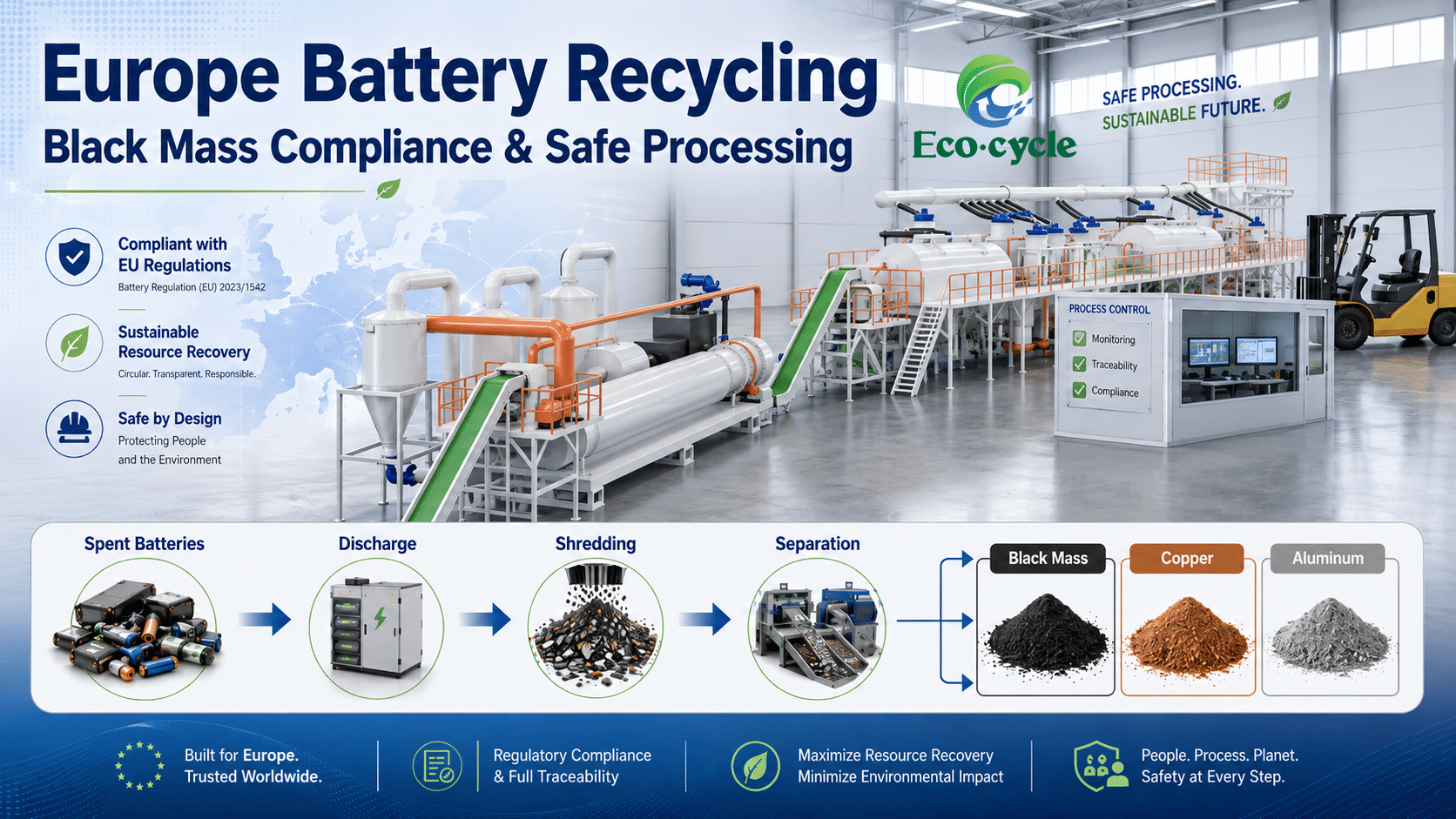
Black mass and fine particulate materials such as copper and aluminum should be weighed separately.
If the production line also produces steel, plastic, or other materials, these should also be recorded separately according to the actual output structure.
V. Sampling Information
Each sample requires a corresponding sampling time, sampling location, material name, and test batch.
If the sample will be used for subsequent laboratory analysis, sample numbering and packaging records should also be established.
VI. Dust Collection and Exhaust Gas System Status
FAT testing should simultaneously observe the dust generation location, collection pipes, negative pressure status, filtration equipment, and exhaust gas treatment system.
Even if the main unit is operating normally, unstable dust collection will still affect the actual use of the entire line.
VII. Abnormalities and Adjustment Records
Stops, parameter adjustments, equipment cleaning, and component replacements that occur during the testing process must have their causes and results recorded. These records are not only used for acceptance testing but also serve as a reference for equipment installation and commissioning after it arrives at the customer’s site.
An effective FAT report should be able to correlate the test raw materials, production process, and final output.
When a project has clear testing and batch records, equipment delivery is no longer just a site demonstration but forms a verifiable project basis.
ECOCYCLE Machinery can assist in preparing production line testing and delivery plans based on raw material type, target capacity, and project configuration.