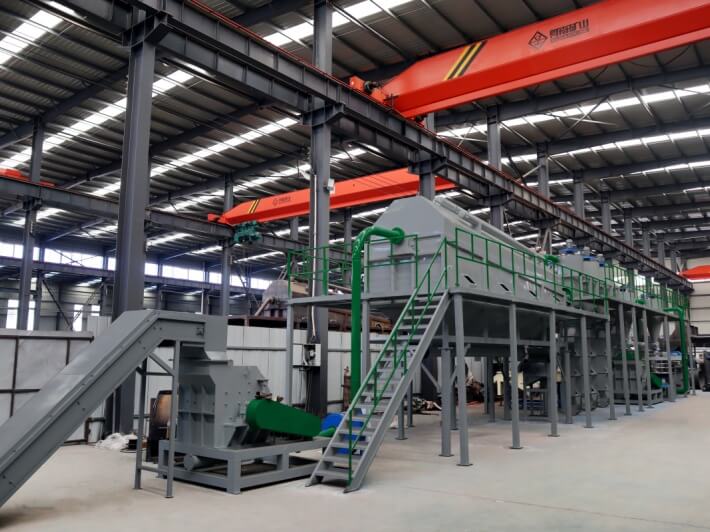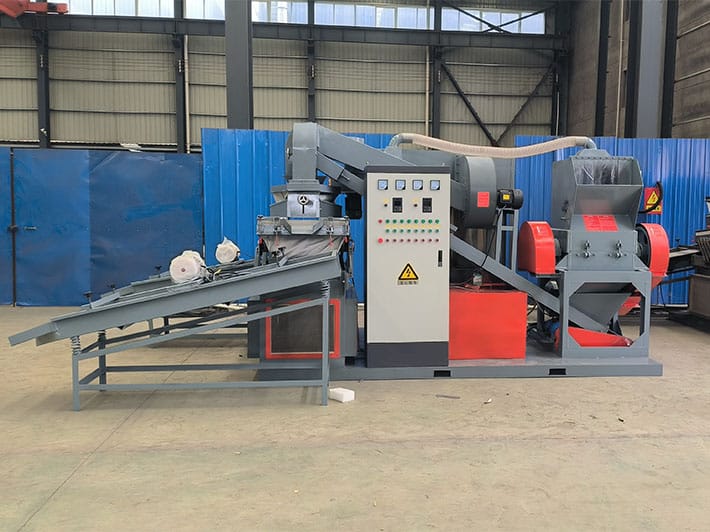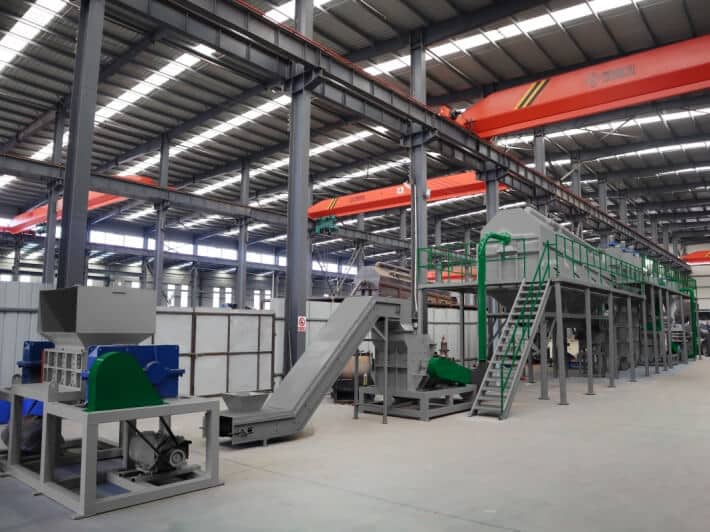
Fitting equipment into a space does not guarantee an easy-to-maintain production line.
When planning a lithium-ion battery recycling line, many projects focus primarily on facility dimensions, equipment footprint, and production capacity.
However, the fact that equipment can physically fit into a facility does not mean the resulting production line will be easy to operate or maintain.
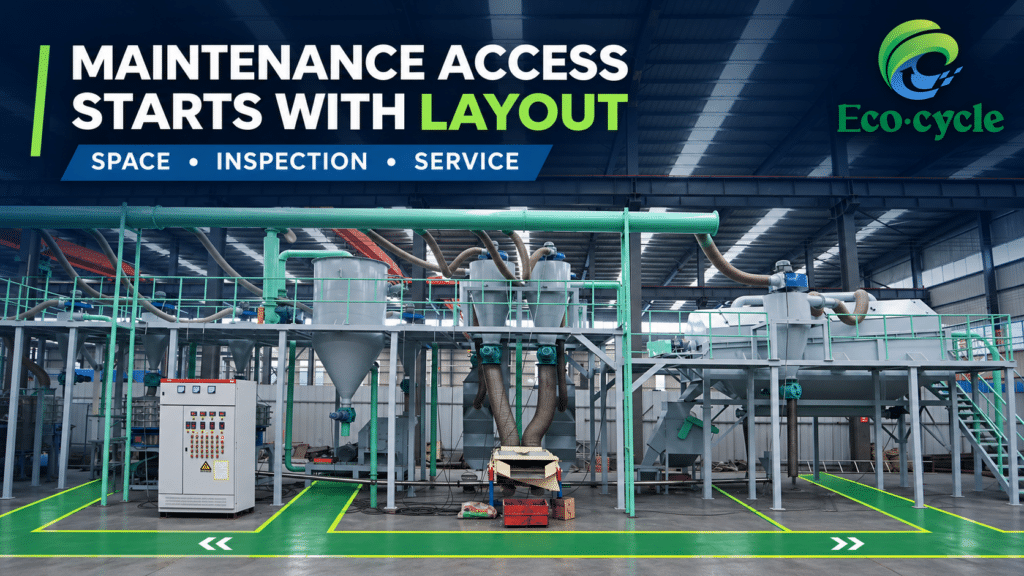
A comprehensive layout must also allocate space for inspection, cleaning, sampling, the replacement of wear parts, and routine maintenance.
Where is maintenance access required?
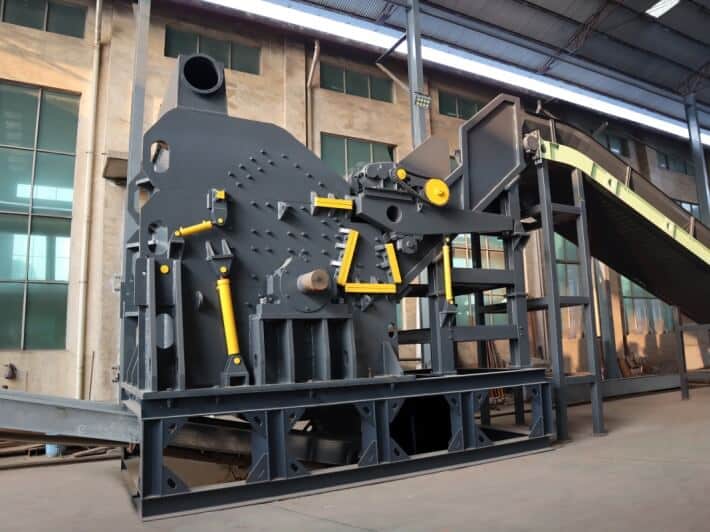
- Crushing and drive components
Crushing equipment typically includes blades, bearings, drive systems, and other components that require periodic inspection.
The layout must ensure that access doors can open fully and that there is sufficient space for the removal and replacement of parts. - Conveyors and equipment connection points
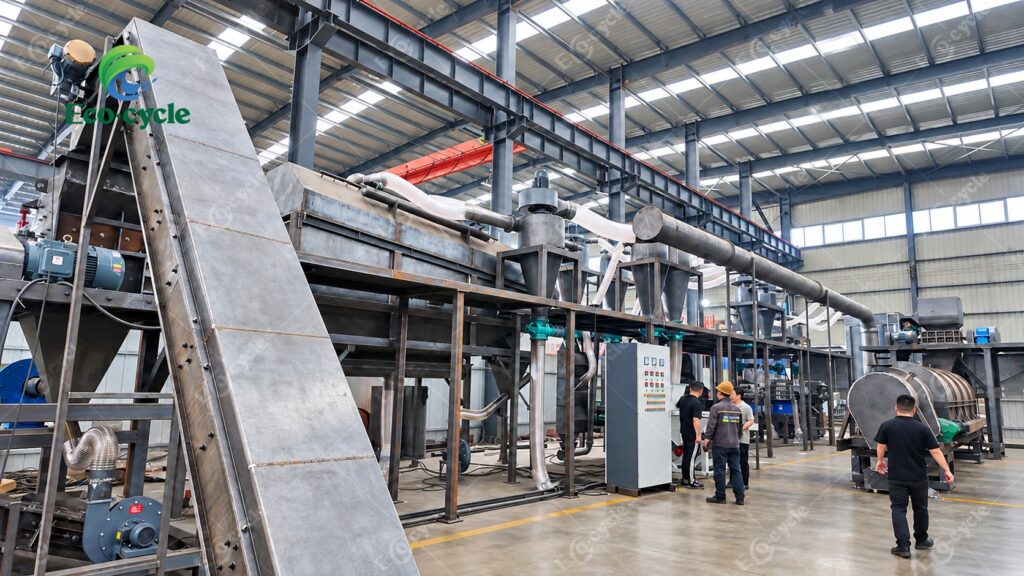
Material can accumulate in hoppers, at conveyor transfer points, or at equipment inlets.
If these areas are positioned too close to walls or other equipment, inspection and cleaning become significantly more difficult. - Screening and separation equipment
Screening, magnetic separation, and air separation equipment require regular inspection and cleaning based on operational conditions.
Beyond providing access aisles around the equipment, the layout must also account for the space needed to remove screens or other internal components. - Dust collection and off-gas treatment systems
Ductwork, filters, fans, and their connection points also require maintenance access.
Environmental control equipment should not be relegated to whatever space remains after the main production line is laid out; rather, it should be planned in tandem with the primary line. - Sampling and discharge points
Sampling points must be easily accessible for staff to collect samples as scheduled, without disrupting the normal material flow.
Adequate operational space must also be reserved in areas designated for the collection and packaging of various output products.
What should be verified before beginning the layout design?
Before finalizing the placement of equipment, consider the following:
- The opening direction of primary access/maintenance doors
- Procedures for removing wear parts
- Access points for cleaning conveyors and ducts
- Locations for sampling points and discharge/packaging areas
- Pathways for operators
- Space required for lifting or transporting components
- Access points for maintaining environmental control equipment
While maintenance access is not directly reflected in a system’s rated capacity, it significantly impacts the ease of future inspections, cleaning, and maintenance along the production line.
Therefore, facility layout should address not only “where to place the equipment” but also “how it will be accessed and used after installation.”
FAQ
A: There is no universal figure that applies to every project. The required space depends on equipment dimensions, the orientation of access doors, component removal methods, and specific facility conditions.
A: No. Equipment such as crushers, screens, conveyors, dust collection systems, and off-gas treatment units have different maintenance requirements and must be evaluated individually.
A: It is possible, provided that factors such as available plant space, power supply, ventilation, environmental control systems, and maintenance access are carefully evaluated.
A: Some adjustments may be possible; however, once equipment foundations, ducts, and conveyors are installed, any subsequent modifications become significantly more complex. It is therefore highly recommended to confirm these requirements during the layout phase.