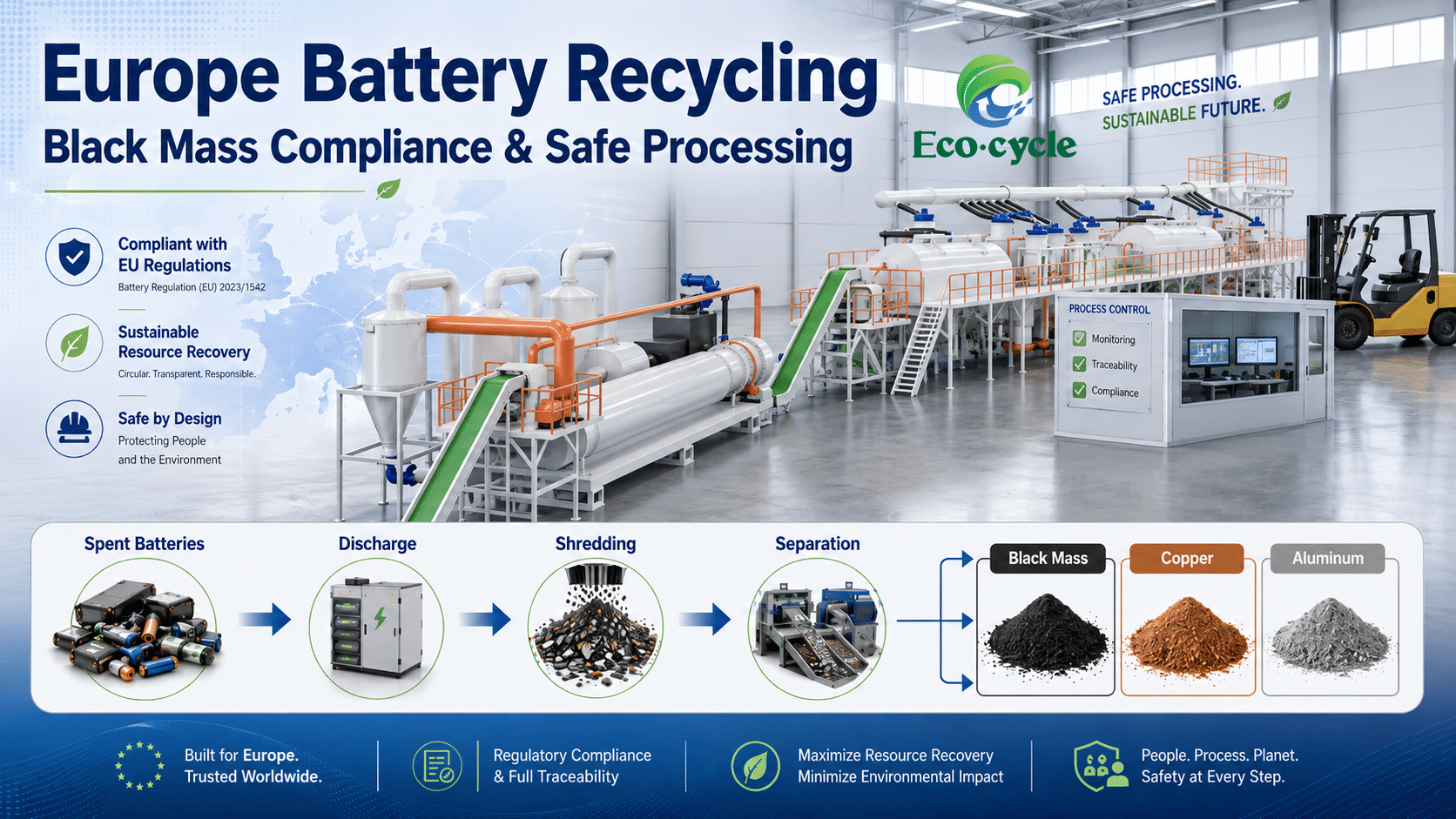
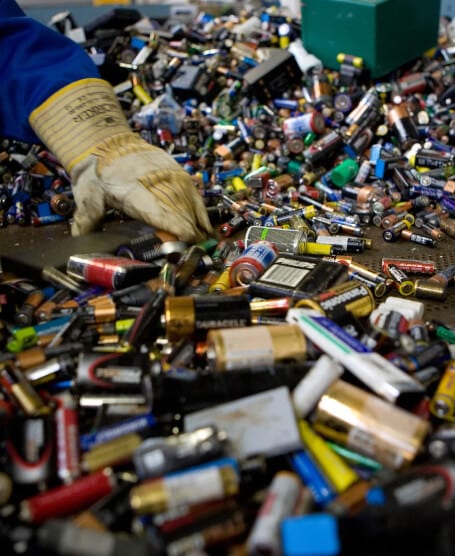
The EU’s target for lithium-based waste battery recycling efficiency has reached 65%, and will be increased to 70% by 2030. European Commission Authorization Regulation (EU) 2025/606 also specifies the calculation and verification methods for recycling efficiency and material recovery rates. (Official statement from the European Commission)
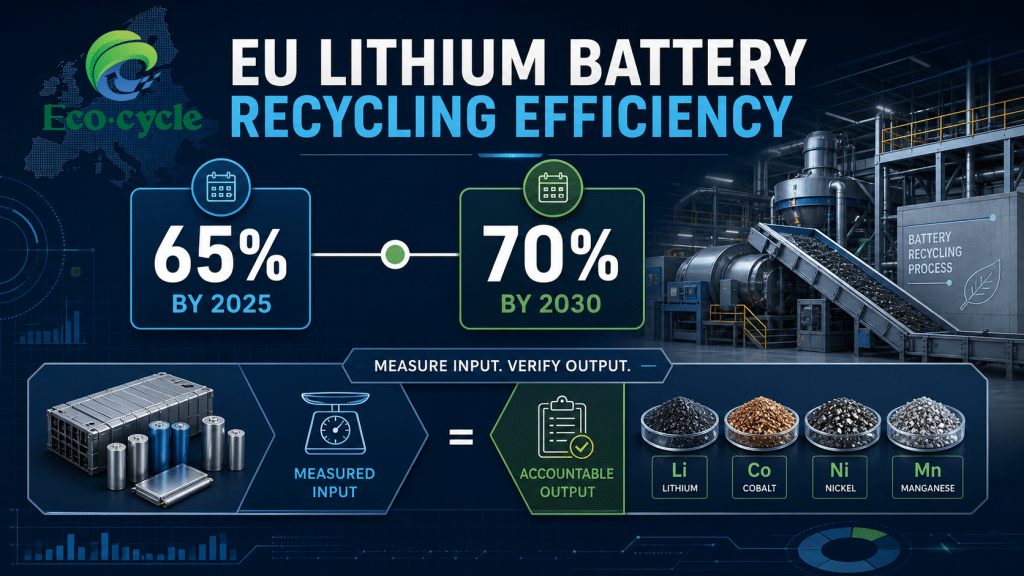
This means that recycling companies cannot only record the amount processed and the amount of black mass produced; they must also establish a complete material traceability system.
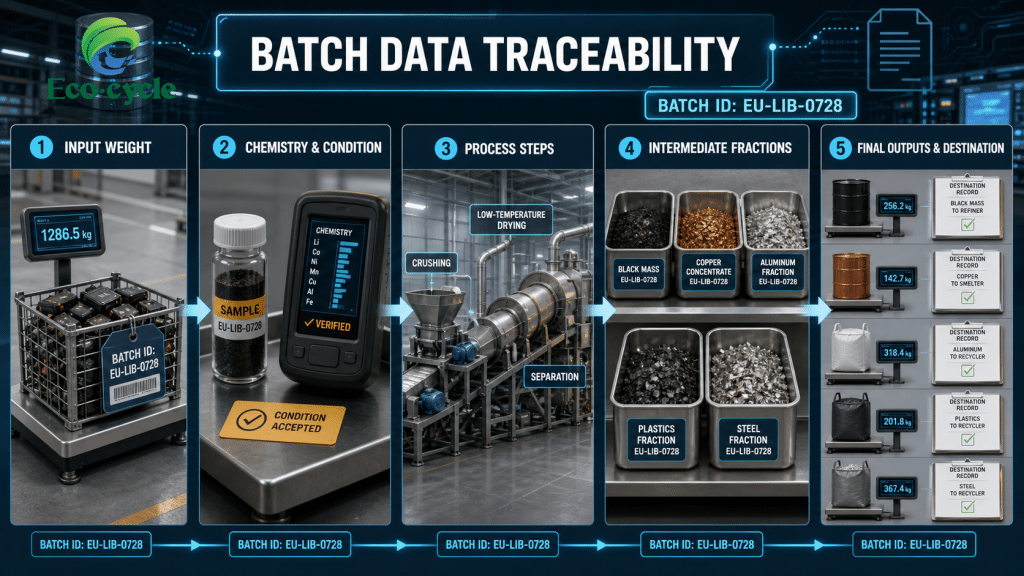
- Feed Data
Each batch of raw materials should record:
Batch number, source, and waste code;
Wet weight, anhydrous weight, and moisture content;
Weighing time and weighing equipment;
Raw material type, such as battery pack, module, cell, or production waste. - Battery Chemistry System and State
Main chemical systems such as NMC/NCM, LFP, and LCO should be distinguished. For mixed raw materials, the proportions of different systems need to be determined through continuous or representative sampling.
It is also recommended to record whether the raw materials have been discharged, disassembled, damaged, damp, or contain impurities.
- Process and Intermediate Materials
Enterprises need to record the crushing, drying, screening, sorting, and subsequent refining processes of materials, as well as the processing location and material weight at each step.
Special Note: According to (EU) 2025/606, black powder is an intermediate material and cannot be directly used as the final output in material recovery calculations. The composition, weight, receiving unit, and subsequent processing direction of the black powder should also be recorded.
- Final Output and Material Flow
Copper, aluminum, steel, plastics, and other outputs should be collected independently and the following should be recorded:
Weight and main components of each batch;
Sampling and testing results;
Packaging and storage location;
Delivered to;
End use and processing yield.
- Process Losses
Dust, exhaust gas treatment residues, wastewater residues, and other wastes should also be recorded to establish a complete material balance. - Batch Traceability
Incoming material, production, intermediate material, final output, and delivery records should be linked through a unified batch number to ensure that the source and destination of each batch of materials can be verified.
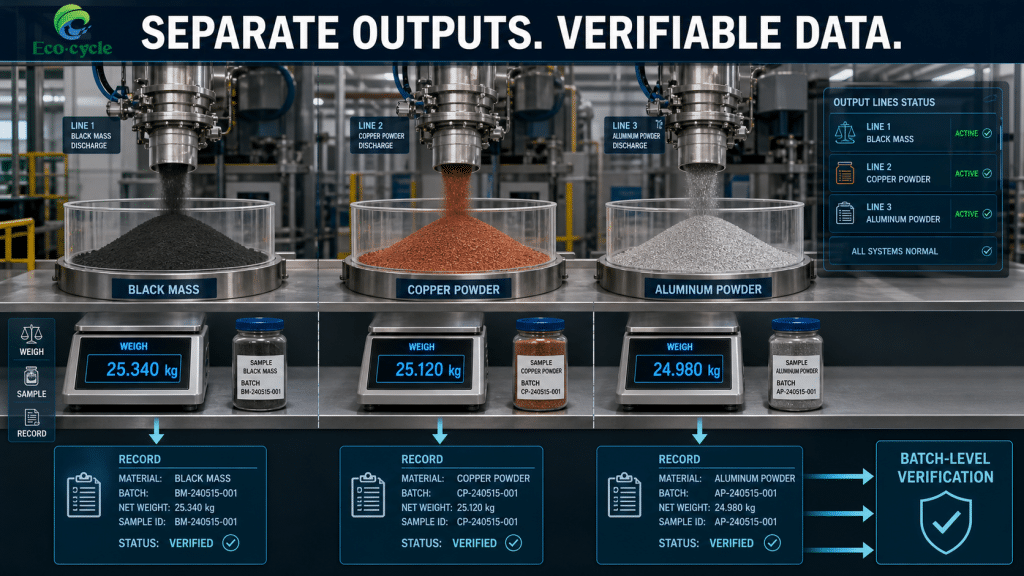
Therefore, when planning a lithium battery recycling production line, the weighing system, sampling location, independent discharge, and data recording system should also be included in the early design phase.
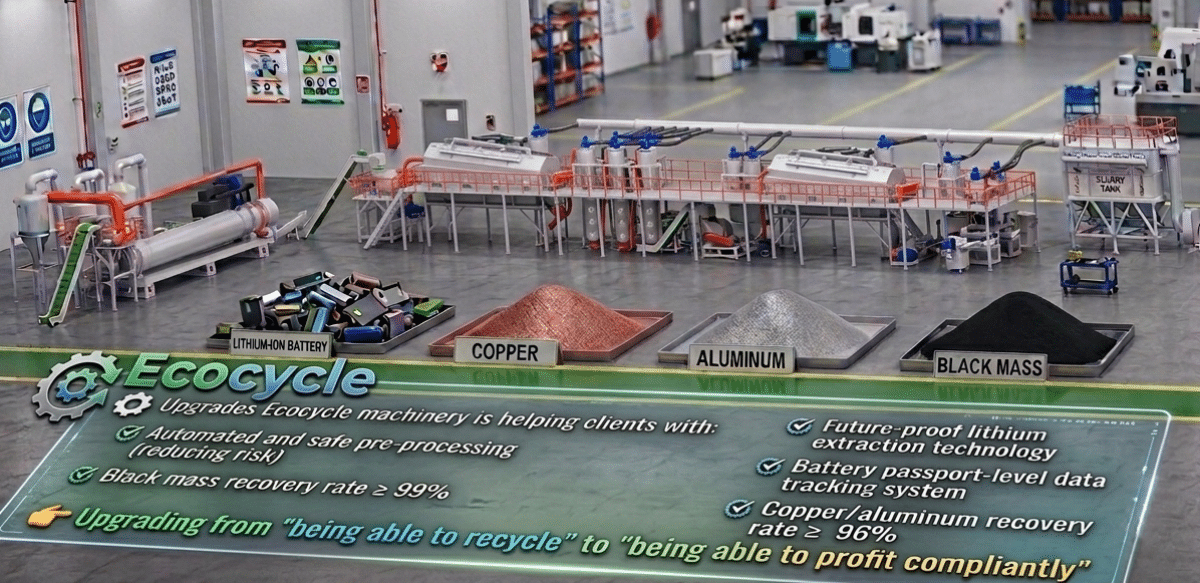
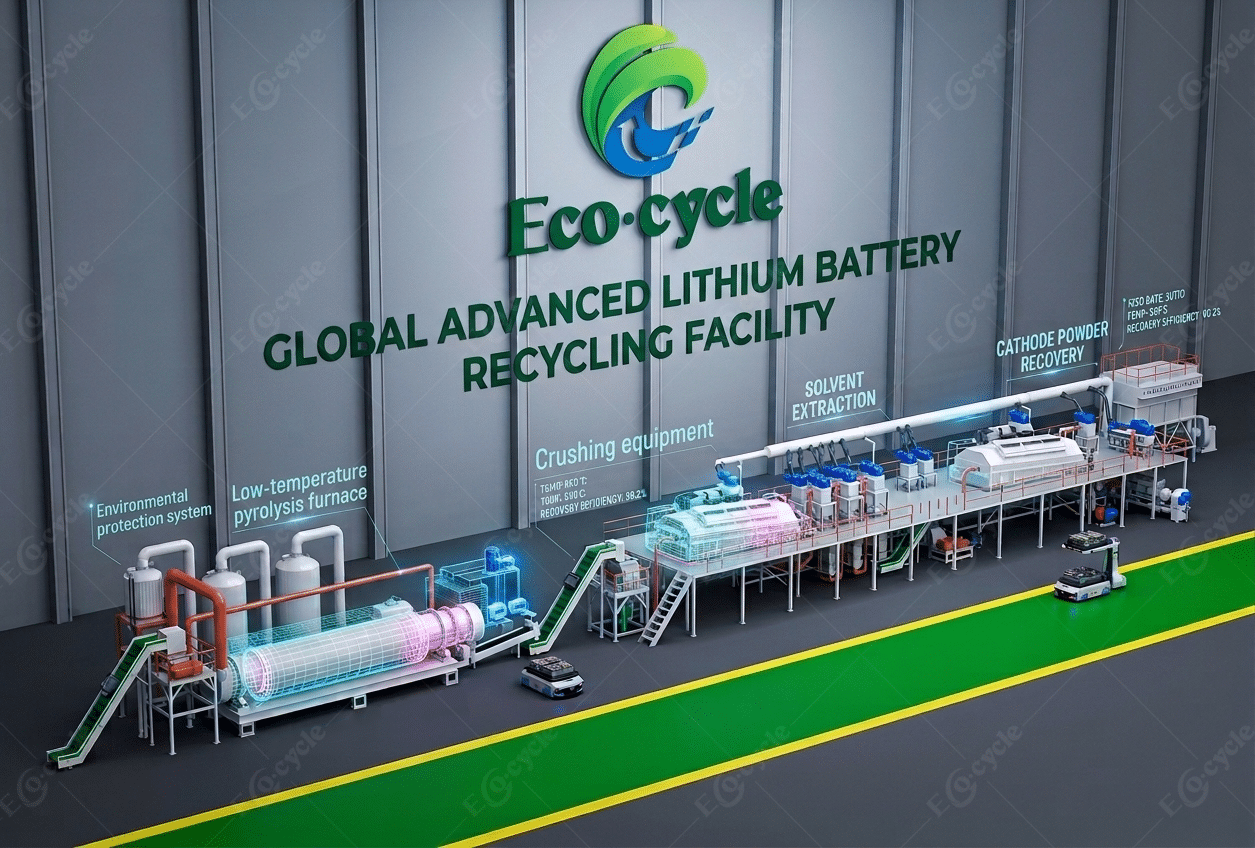
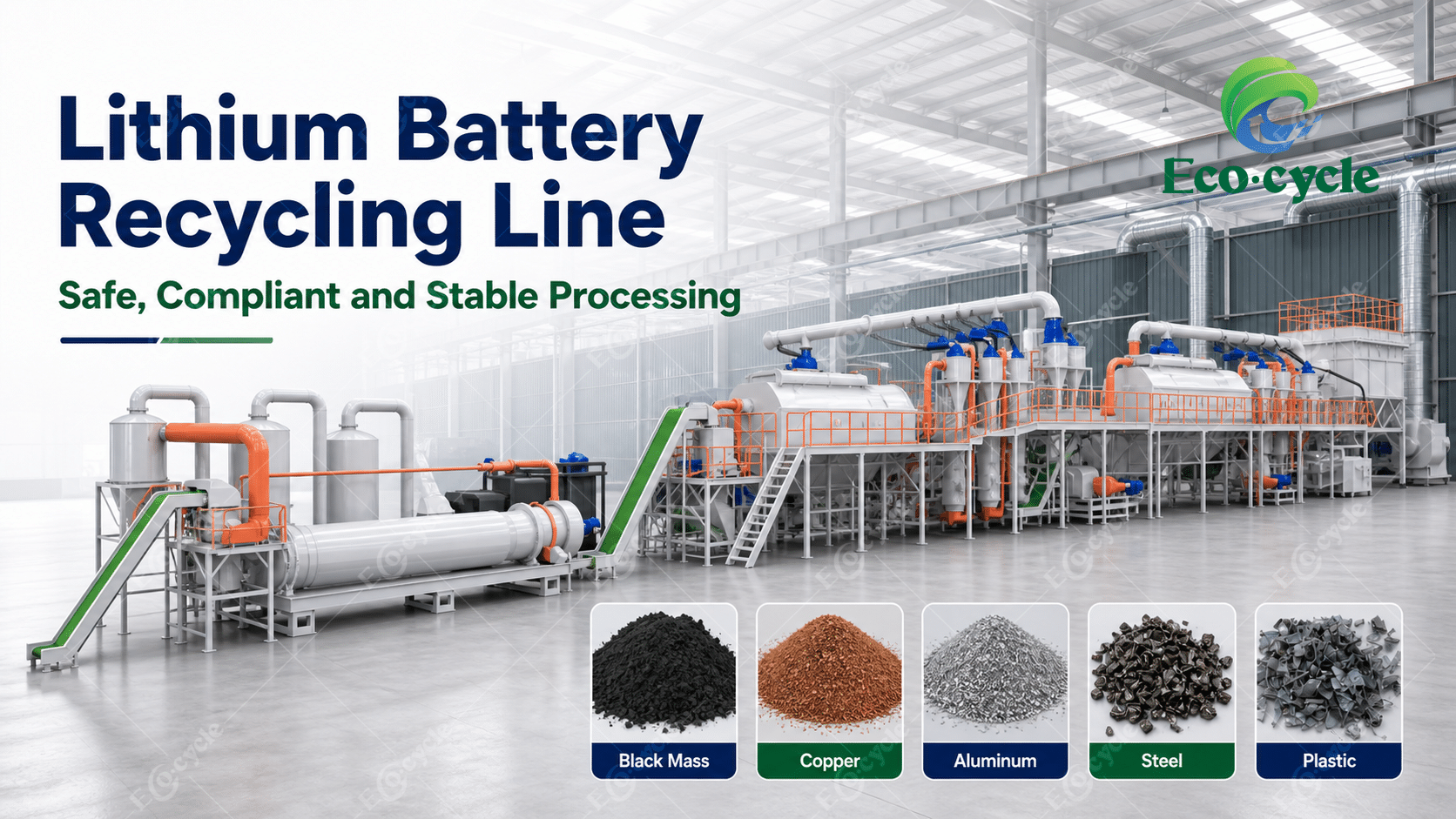
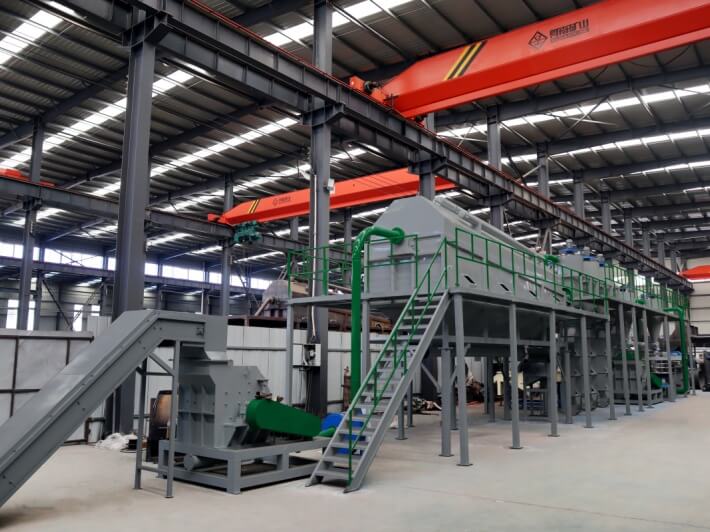
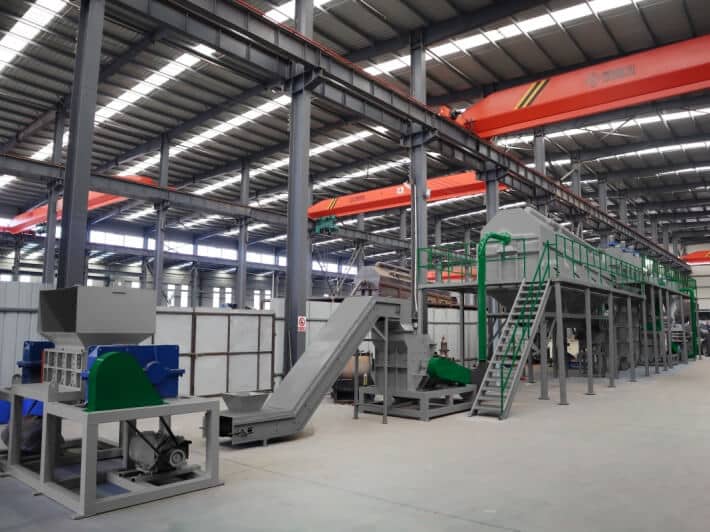
ECOCYCLE Machinery can provide customers with lithium battery crushing, sorting, dust removal, and independent discharge solutions based on the type of raw materials, processing capacity, and target products.