The EU Authorisation Regulation (EU) 2025/606 clarifies the methods for calculating and verifying waste battery recycling efficiency and material recovery rates.
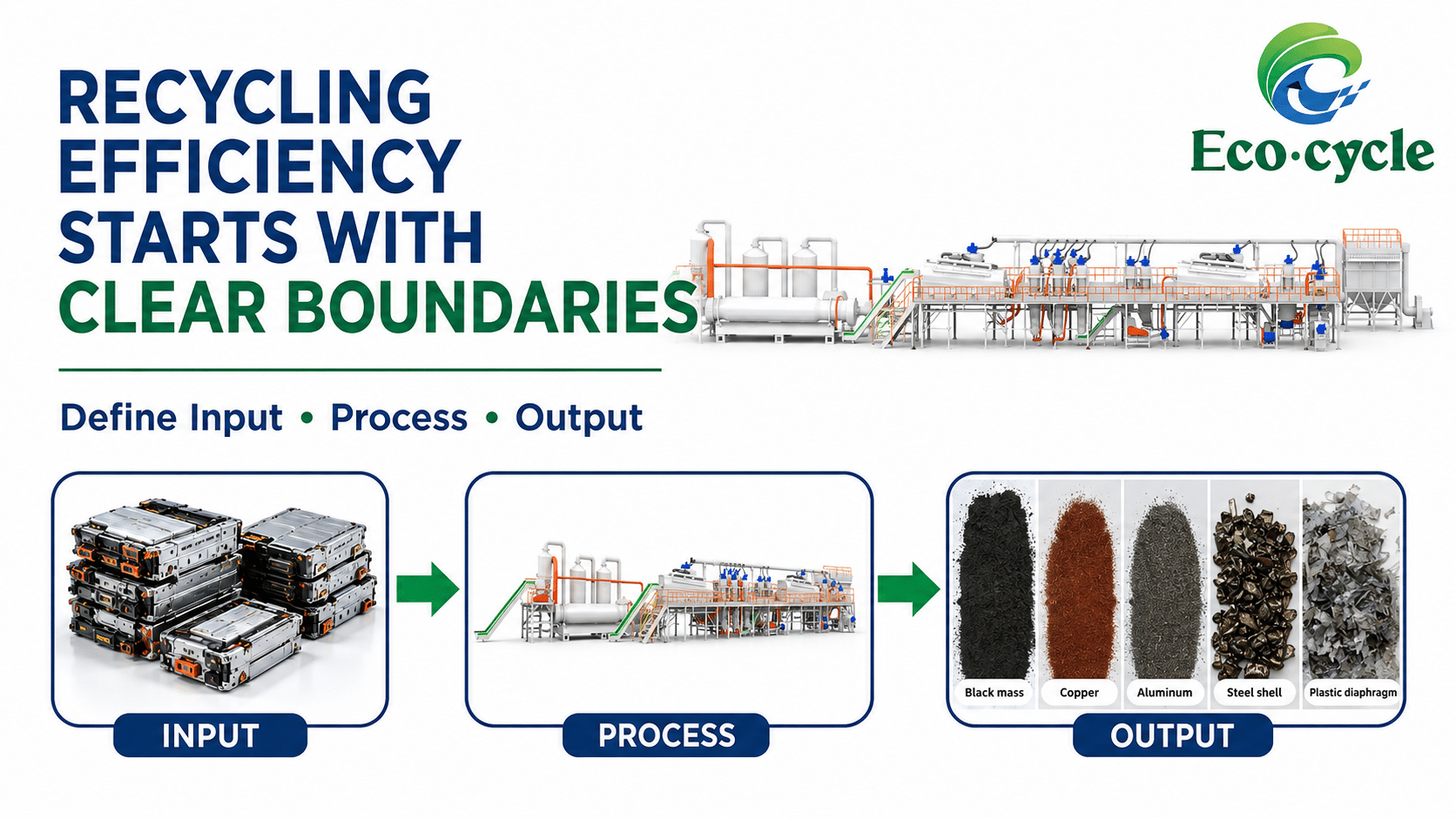
For lithium battery recycling projects, the focus is not just on filling out statistical tables, but on answering three key questions:
- What materials are inputs to the production line?
- What products can be included in the recycling output?
- At which processing node are the recycling results calculated?
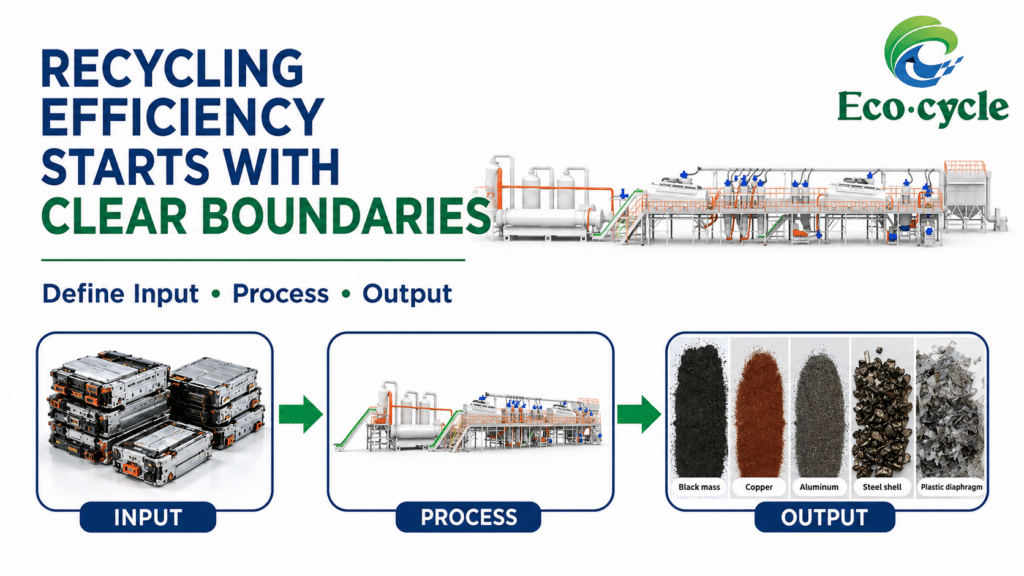
First, clarify the input boundaries of the production line.
Projects cannot simply record how many batteries are processed each day; they also need to describe the actual state of the input materials, such as the battery chemistry, net weight, batch number, and whether disassembly or front-end sorting has been completed.
Packaging, miscellaneous items, and non-battery materials, if not separately deducted, may affect the calculated recycling efficiency. Recording a mixture of different chemical systems will also increase the difficulty of subsequent data verification.
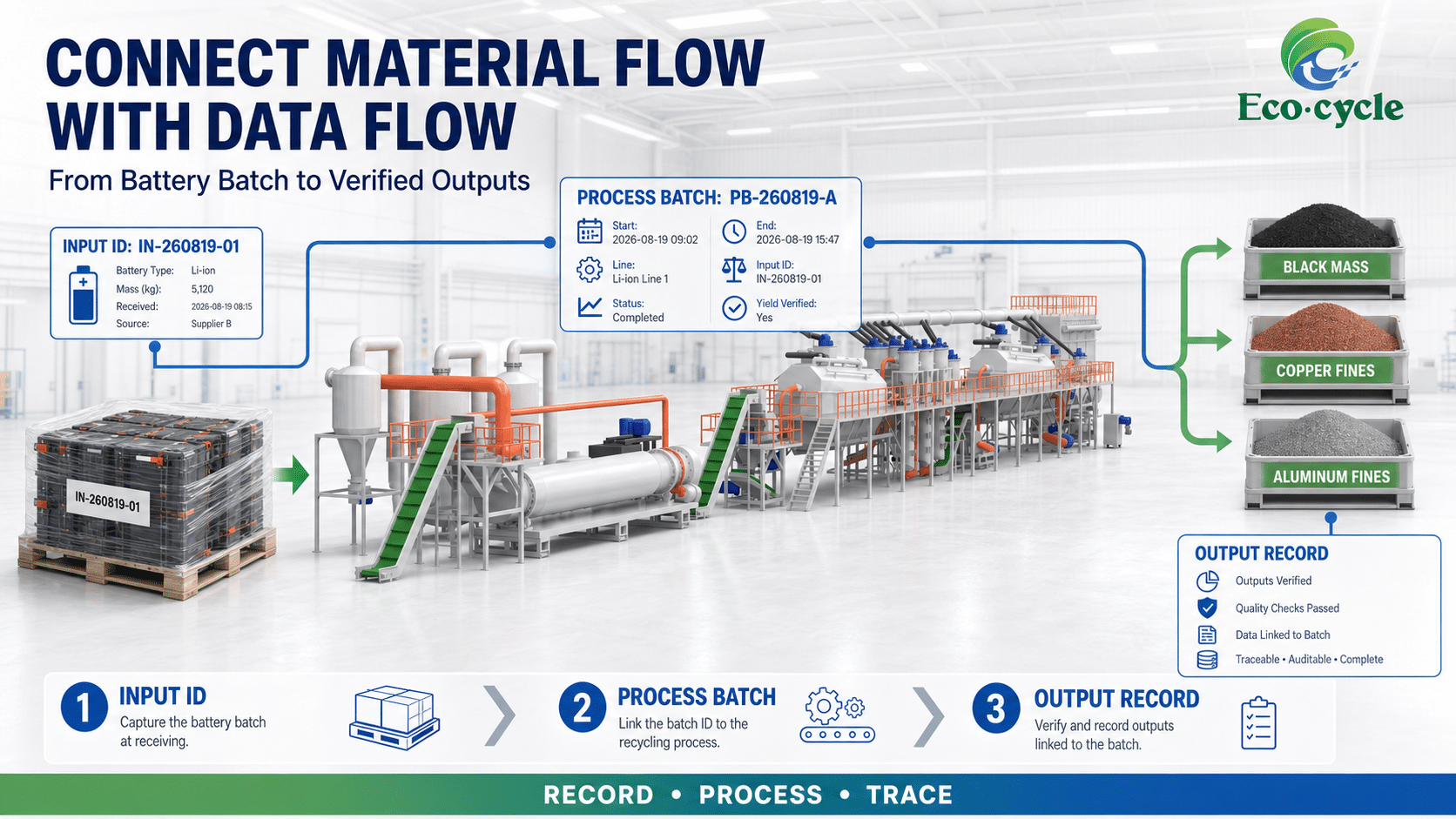
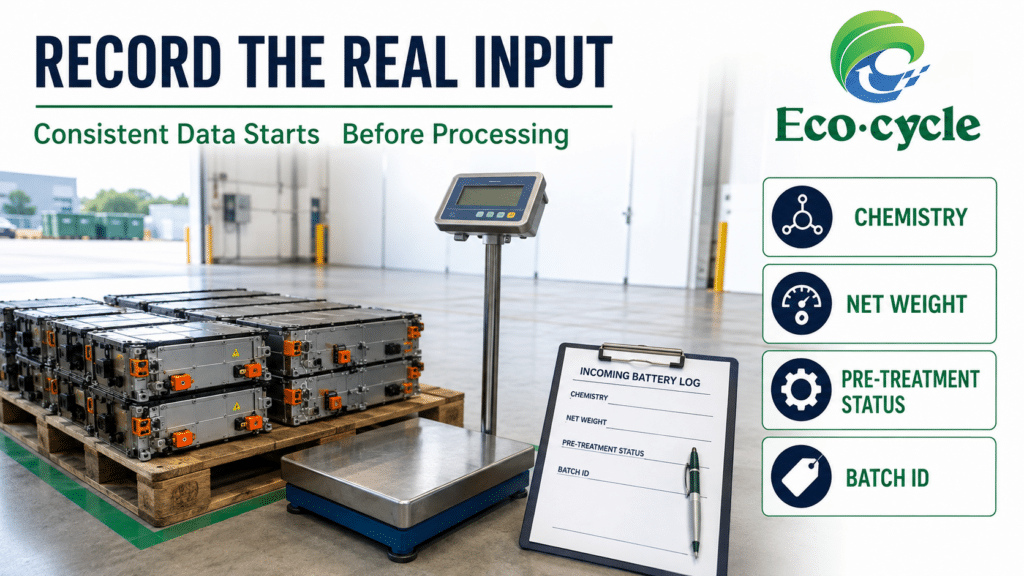
Make each batch of incoming materials traceable.
A practical approach is to record the following information before the materials enter the production line:
- Battery chemistry system
- Actual net weight
- Pre-treatment status
- Incoming batch number
This information helps the project correlate incoming materials, equipment operation, and final output, and also facilitates comparison of processing results between different batches.
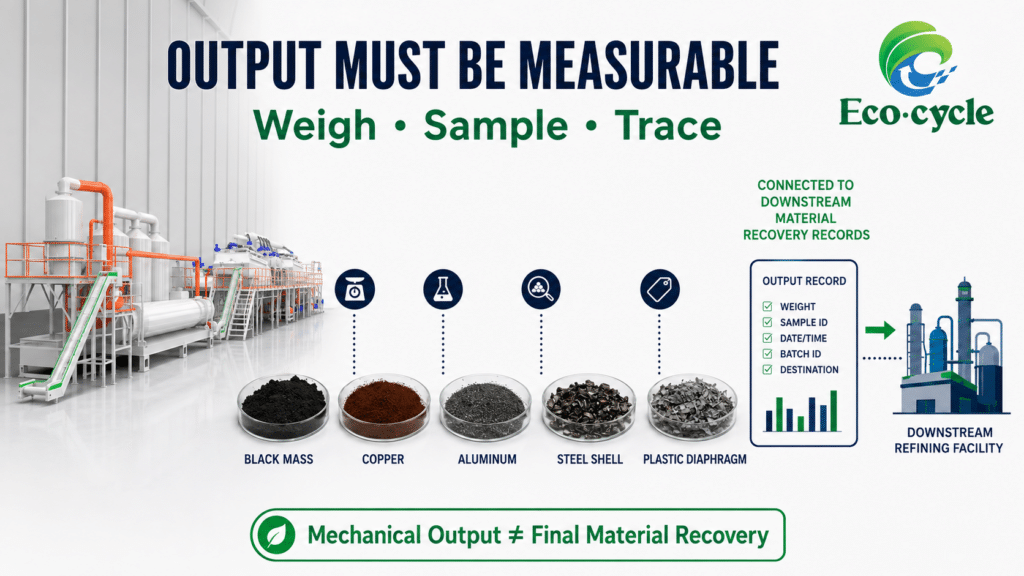
Mechanical discharge does not equate to final material recovery.
Lithium-ion battery mechanical processing lines may generate black mass, copper, aluminum, and residues. However, not all materials discharged from the equipment can be directly included in the final material recovery rate.
For example, obtaining black mass indicates that mechanical processing and sorting have created intermediate products. However, the final recovery of materials such as lithium, nickel, and cobalt requires confirmation based on downstream extraction processes and product destinations.
Therefore, each discharge port should have independent collection, weighing, and sampling capabilities, and the test results should be correlated with the corresponding batch.
Data requirements should be considered during the project design phase.
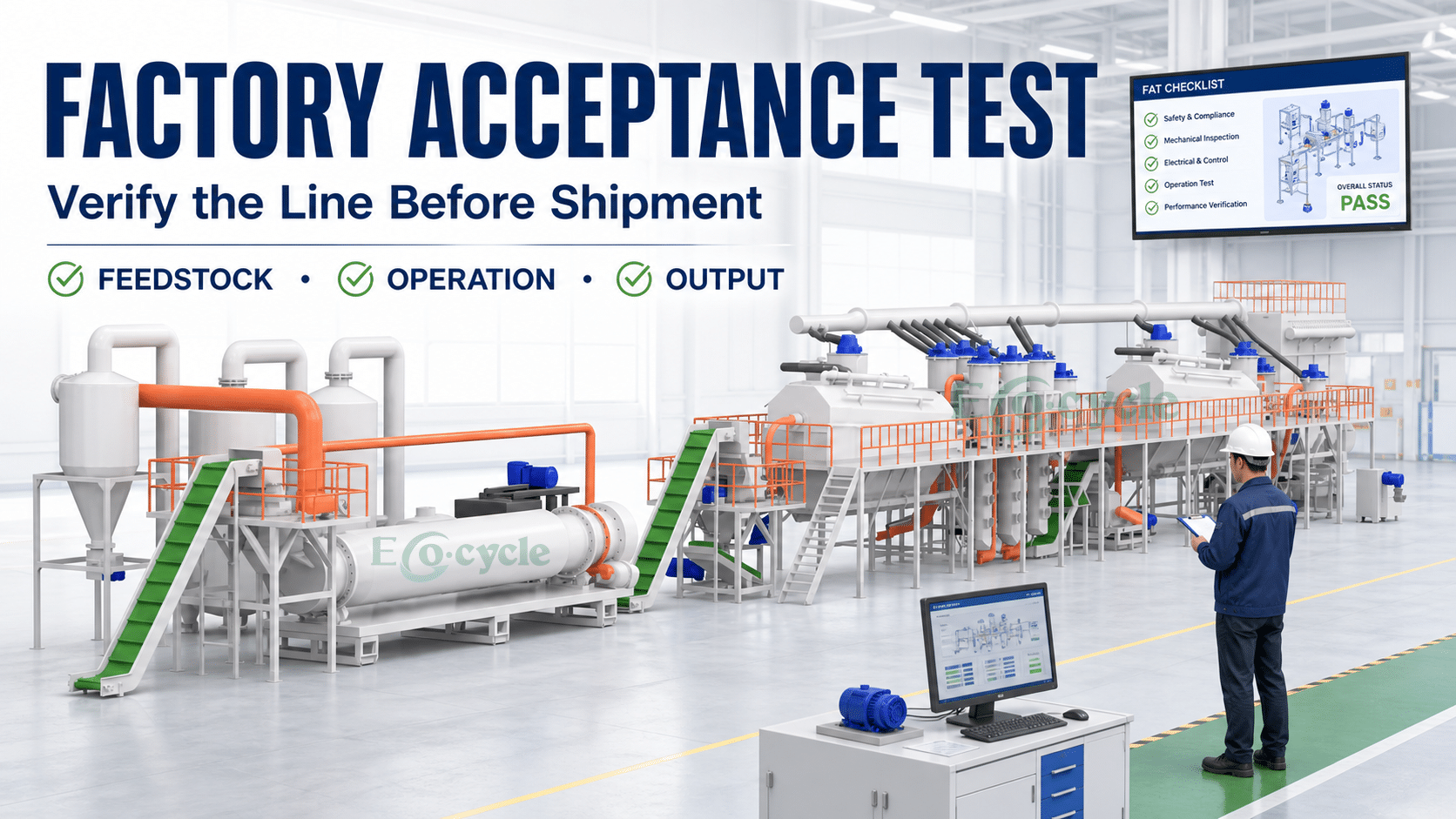
To establish a clear material balance, production line plans can be pre-planned to include infeed weighing, independent discharge, representative sampling, batch numbering, and recording of operating parameters.
These configurations cannot replace laboratory testing or regulatory validation, but they can make project data more complete and reduce supplementary work during acceptance testing and subsequent verification.
ECOCYCLE Machinery will plan the corresponding weighing, sampling, and recording conditions based on the actual raw materials, target products, and downstream processing paths, enabling the production line’s processing results to be calculated, verified, and traceable.